
Permanent Lighting Orlando The Complete Planning Guide
This permanent lighting guide explains how professionally designed lighting systems can transform Orlando commercial properties, hotels, resorts, restaurants, apartment communities, entertainment venues, courtyards, and outdoor spaces.
Unlike temporary event lighting, a permanent lighting system is planned around the property’s architecture, electrical infrastructure, outdoor exposure, mounting locations, controls, maintenance requirements, and long-term visual goals.
Permanent Lighting Orlando What Makes a Lighting System Permanent?
Permanent lighting in Orlando is designed, installed, powered, and controlled as a long-term part of a property rather than brought in temporarily for a single event.
The lighting may illuminate architecture, landscaping, patios, courtyards, restaurants, hospitality spaces, entertainment venues, walkways, gathering areas, or other parts of a commercial property. What makes the system permanent is not simply the type of fixture — it is how the entire system is planned and installed.
Permanent Lighting Becomes Part of the Property
Temporary event lighting is normally installed for a limited period and removed after the event. Permanent systems are designed around long-term fixture locations, electrical connections, mounting methods, weather exposure, control zones, service access, and the architecture of the property.
A permanent installation may still use fixtures that resemble equipment used for events — such as uplights, string lights, accent fixtures, or architectural washes — but the infrastructure and installation are designed to remain in place.
An uplight or string light is not automatically permanent. Permanent lighting depends on the complete installation: fixture mounting, wiring, power, controls, weather protection, placement, maintenance access, and long-term use.
Four Elements Define a Permanent Lighting Installation
Dedicated Fixture Locations
Fixtures are positioned around the architecture, landscape, patio, courtyard, roofline, structure, or gathering area according to the intended long-term lighting design.
Permanent Power & Wiring
Electrical connections and cable routes are planned for continued operation rather than temporary event deployment and removal.
Mounting & Weather Protection
Equipment, enclosures, mounting hardware, and installation methods should be appropriate for the location and expected indoor or outdoor conditions.
Controls & Lighting Zones
Permanent systems can be divided into zones and scenes so different parts of the property can operate at different intensities, colors, schedules, or uses.
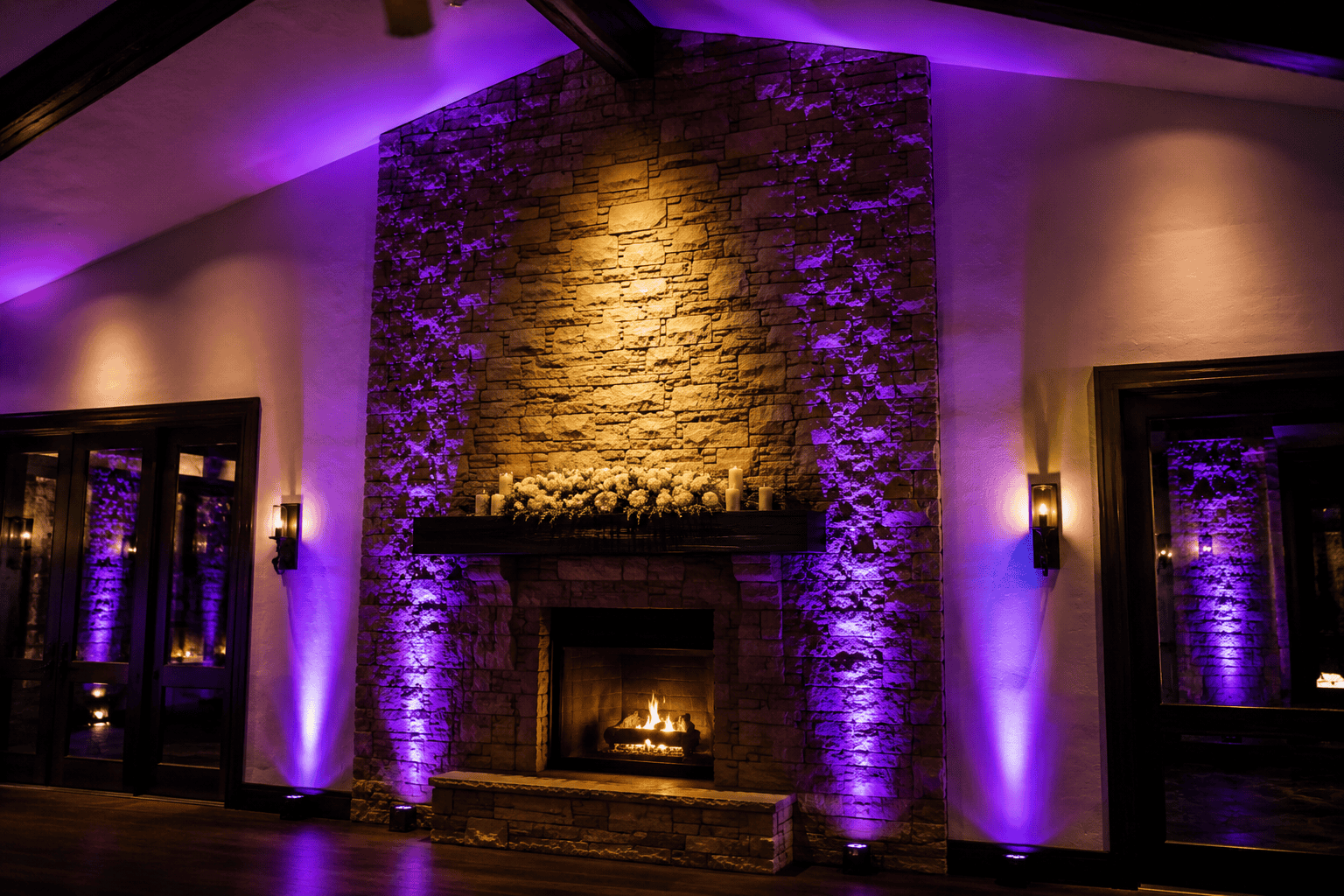
Similar Lighting Effects Different Installation Strategies
Both approaches can create attractive environments, but they solve different problems. Temporary systems are flexible for individual events; permanent systems are built for repeated everyday use.
Designed to Arrive and Leave
Temporary lighting is installed for a specific wedding, conference, gala, celebration, or production and removed when the event is complete.
- Event-specific setup
- Temporary power and cabling
- Flexible fixture placement
- Short-term operation
- Removed after the event
Designed to Stay With the Property
Permanent lighting is planned as part of the property environment and designed for ongoing operation, control, maintenance, and repeated use.
- Long-term fixture positions
- Permanent electrical planning
- Integrated control zones
- Weather-aware installation
- Maintenance and service access
Permanent Lighting Works Across Many Property Types
The system can be designed around atmosphere, architectural visibility, guest experience, branding, safety, or repeated entertainment use.
Restaurants & Patios
Permanent bistro lighting, architectural accents, and landscape lighting can create inviting dining environments night after night.
Hotels & Resorts
Courtyards, terraces, pool areas, entrances, event lawns, and hospitality spaces can use integrated lighting to support both everyday guests and special events.
Apartment Communities
Clubhouses, pool decks, outdoor lounges, courtyards, gathering spaces, and common areas can benefit from permanent atmospheric and architectural lighting.
Entertainment Venues
Permanent lighting systems can support recurring performances, private events, guest experiences, exterior identity, and programmable venue environments.
Courtyards & Gardens
String lighting, landscape accents, tree lighting, architectural washes, and pathway illumination can establish a consistent nighttime atmosphere.
Commercial Properties
Permanent lighting can reinforce architecture, entrances, gathering areas, outdoor amenities, brand identity, and the nighttime appearance of a property.
Permanent Lighting Guide Where Permanent Lighting Works Best
The strongest permanent lighting in Orlando is designed around how people actually move through and use a property after dark.
Entrances, architecture, patios, courtyards, gardens, trees, walkways, gathering spaces, pool areas, and hospitality zones can all benefit from lighting that improves atmosphere, visibility, visual identity, and nighttime usability.
Light the Places People Actually Experience
Permanent lighting should not be added randomly across a property. The best results come from identifying the spaces guests notice, use, enter, gather in, photograph, and move through after sunset.
That often means combining several lighting layers rather than relying on one fixture type. Architectural uplighting, warm accent lighting, pathway illumination, string lighting, landscape lighting, and controlled decorative effects can all work together.
The goal is not to make every surface equally bright. Permanent lighting works best when it creates visual hierarchy — important areas feel intentional while secondary areas remain comfortable and balanced.
Eight Property Areas That Benefit From Permanent Lighting
Building Architecture
Walls, columns, stonework, facades, rooflines, and architectural details can be highlighted to strengthen the nighttime appearance of the property.
Entrances
Entry lighting helps establish the first nighttime impression while improving visibility around doors, arrival areas, signage, and guest access points.
Patios & Dining Areas
Warm overhead lighting, accent fixtures, and architectural illumination can make outdoor dining areas feel inviting, comfortable, and visually connected.
Courtyards
Courtyards can combine string lighting, landscape accents, architectural washes, tree lighting, and gathering-area illumination.
Trees & Landscaping
Landscape lighting can reveal trees, palms, planting beds, garden features, and other outdoor elements that disappear after dark without dedicated illumination.
Walkways & Paths
Path and transition lighting can help guests move comfortably between entrances, patios, courtyards, pools, event spaces, and other areas of the property.
Pool & Resort Areas
Pool decks, cabanas, lounges, terraces, and resort amenities can use layered lighting to create a polished evening environment.
Gathering & Event Spaces
Permanent systems can support everyday use while also giving venues and hospitality properties a built-in foundation for recurring events and private functions.
Strong Permanent Lighting Usually Uses More Than One Layer
Different lighting layers perform different jobs. Combining them allows a property to feel more dimensional, comfortable, and visually intentional after dark.
Architectural Lighting
Highlights walls, columns, stone, facades, entries, rooflines, and defining structural features.
Ambient Lighting
Establishes comfortable overall illumination for patios, courtyards, lounges, and guest gathering areas.
Accent Lighting
Draws attention to landscaping, art, signage, architectural details, focal points, and decorative features.
Decorative Lighting
Bistro strings, decorative fixtures, color accents, and visible lighting elements can become part of the property’s visual identity.
Permanent Lighting Can Serve Different Commercial Environments
Restaurants
Patios, entrances, exterior architecture, dining spaces, landscaping, and courtyards can all become part of the nighttime dining experience.
Hotels & Resorts
Hospitality properties often need lighting across entrances, pool areas, terraces, event lawns, courtyards, restaurants, pathways, and guest gathering spaces.
Apartment Communities
Clubhouses, outdoor lounges, pool decks, courtyards, paths, gathering spaces, and amenity areas can benefit from permanent nighttime lighting.
Entertainment Venues
Permanent systems can support venue identity, entrances, recurring productions, outdoor areas, private events, architectural features, and guest circulation.
Lighting Systems for Permanent Commercial Installations
A permanent lighting design rarely depends on a single type of fixture. Different areas of a property require different beam patterns, mounting positions, light levels, colors, and control.
For Orlando restaurants, hotels, resorts, venues, apartment communities, and commercial properties, the right system may combine architectural uplighting, wall washing, landscape lighting, bistro lighting, pathway fixtures, and programmable accent lighting into one coordinated environment.
Choose the Fixture for the Job It Needs to Perform
Fixture selection should follow the design objective. A narrow beam highlighting a column performs a different job than a broad wall wash, an overhead string-light system, or a low-level fixture illuminating a walkway.
Fixture Second.
Determine what the lighting needs to accomplish before selecting the equipment.
Common Fixtures Used in Permanent Lighting Design
Each lighting type solves a different visual or functional problem. A complete property design may use several of these systems together.
Architectural Uplighting
Upward-facing fixtures can reveal columns, walls, stonework, facades, palms, structural details, and vertical architectural features after dark.
Wall Wash Lighting
Broader distributions spread light across larger surfaces, producing more even illumination than a narrow accent beam and helping architecture feel visually connected.
Bistro & String Lighting
Overhead strings create warm ambient illumination while becoming a visible design feature across patios, courtyards, gardens, dining spaces, and hospitality areas.
Landscape Accent Lighting
Landscape fixtures can highlight trees, palms, planting beds, gardens, sculptures, water features, and other outdoor focal points throughout a property.
Path & Walkway Lighting
Lower-level fixtures can define routes between entrances, amenities, patios, courtyards, pools, gardens, parking areas, and gathering spaces.
Color-Changing Lighting
Programmable fixtures can change the appearance of architecture and hospitality environments for seasons, holidays, branded events, private functions, or different operating modes.
Fixture Type Is Only Part of the Decision
Two fixtures can look similar while producing very different results. Beam angle, brightness, color temperature, color quality, glare control, dimming, and placement all influence what guests actually see.
Beam Angle
Narrow beams emphasize specific features. Wider beams spread light across larger surfaces and areas.
Color Temperature
Warm and cooler white light can create very different impressions across architecture, landscaping, dining, and hospitality spaces.
Brightness
More output is not automatically better. Light levels should fit the surface, distance, environment, and purpose of the area.
Glare Control
Fixture position and aiming should reduce distracting direct light in guest sightlines wherever practical.
Dimming
Adjustable output allows a property to create different looks for everyday operation, dining, private events, and late-night use.
Color Capability
RGB or other color-capable systems can add flexibility when a property needs seasonal, branded, entertainment, or event looks.
The Best System May Need Both
Warm white lighting often provides the foundation for restaurants, patios, hospitality spaces, architecture, and everyday property use. Color-capable fixtures can then add another layer when the property needs a different visual identity for holidays, events, branding, entertainment, or special occasions.
A flexible permanent system does not have to make the property look like an event venue every night. Good control allows the lighting environment to change with the way the property is being used.
Permanent Lighting Guide Design, Placement & Lighting Zones
Strong permanent lighting in Orlando depends on where fixtures are placed, what they illuminate, how bright they are, and how the system is divided into controllable zones.
A successful design should feel intentional from every major guest viewpoint. Architecture, landscaping, patios, entrances, pathways, gathering spaces, and hospitality areas all need different levels of emphasis and different types of coverage.
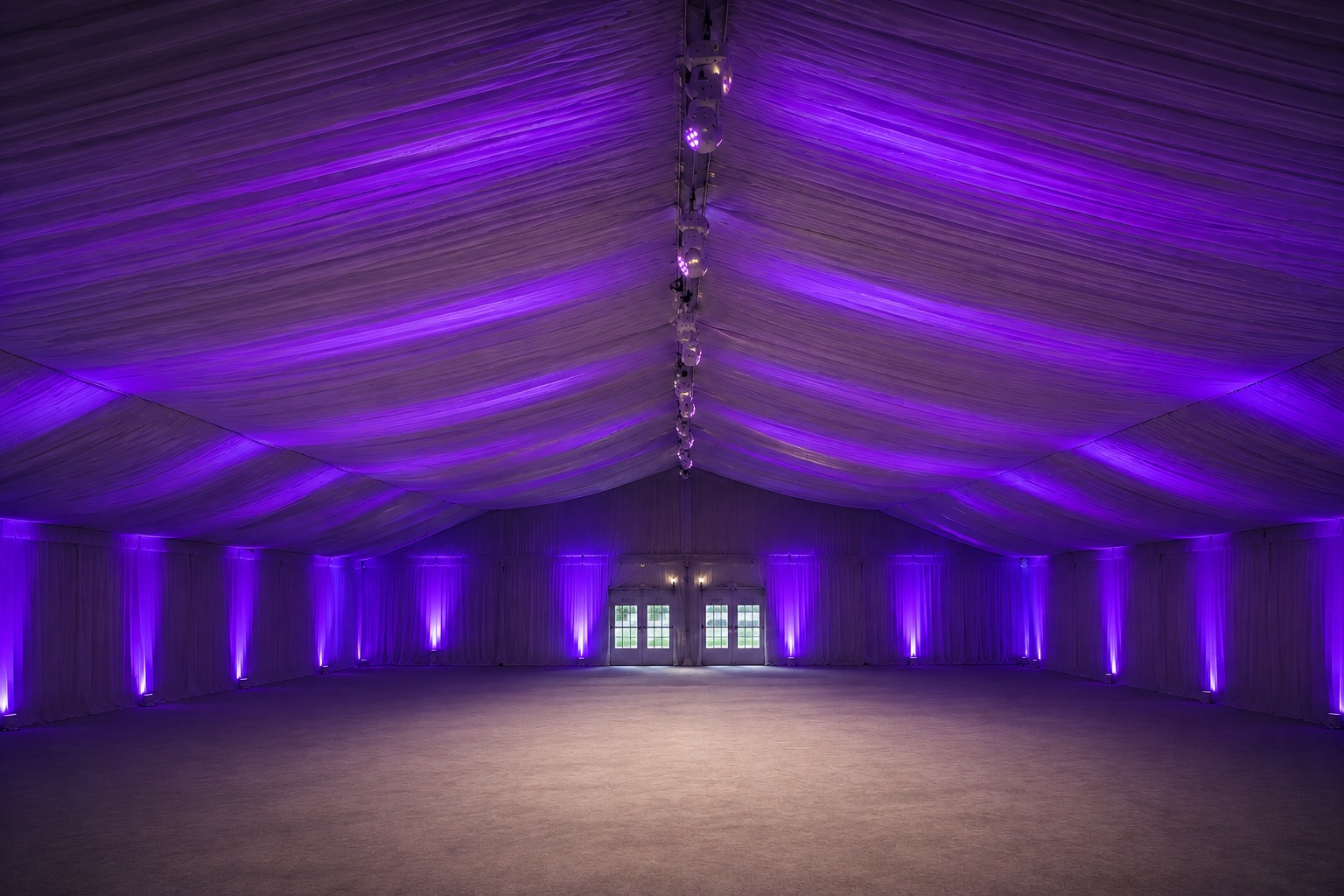
Placement Determines What Guests Notice First
Permanent lighting should guide attention through the property. Important architecture, entrances, gathering spaces, and landscape features can be emphasized while secondary areas remain softer.
The goal is not to light every surface equally. A layered design creates contrast, depth, comfort, and a stronger sense of place.
Start with the property experience: arrival, movement, gathering, dining, entertainment, and departure. Fixture placement should support those moments.
Six Details That Shape Permanent Lighting Design
Viewing Angles
Fixtures should be aimed so important surfaces are illuminated without creating distracting glare from common guest viewpoints.
Beam Spread
Narrow beams create focused accents while wider distributions provide broader coverage across walls, landscaping, and outdoor gathering areas.
Fixture Distance
Distance from the target affects brightness, coverage, beam size, shadowing, and how visible the fixture itself becomes.
Mounting Height
Higher and lower mounting positions create different shadows, visibility, coverage patterns, and maintenance requirements.
Surface Material
Stone, stucco, glass, wood, landscaping, metal, and water all respond differently to light and may require different angles or intensities.
Guest Sightlines
Direct fixture glare should be minimized around dining areas, entrances, seating, walkways, pool decks, and other primary guest locations.
Divide the Property Into Controllable Areas
Permanent lighting becomes more flexible when different areas can be controlled independently instead of operating as one large system.
Architecture
Facades, columns, walls, rooflines, entries, and other structural elements can operate as a dedicated lighting layer.
Patios & Dining
Outdoor dining and lounge areas may need lower, warmer lighting levels than entrances or architectural features.
Landscape
Trees, palms, gardens, sculptures, and landscape features can be adjusted independently from building lighting.
Walkways
Path and circulation lighting can remain consistent while other decorative areas change intensity or color.
Event Areas
Courtyards, lawns, entertainment spaces, and private-event zones can use separate scenes for everyday and event operation.
Seasonal / Color Areas
Color-capable fixtures can be grouped so only selected parts of the property change for holidays, branding, or special occasions.
More Light Is Not Always Better
Permanent lighting should be bright enough to support the property without becoming visually harsh. Over-lighting can flatten architecture, create glare, reduce atmosphere, and make adjacent areas appear unnaturally dark.
Strong designs use contrast intentionally. Important features can stand out while surrounding areas remain softer and more comfortable.
Highlight
Use stronger emphasis for entrances, signature architecture, focal landscaping, signage, and important property features.
Support
Secondary lighting should support the environment without competing with the main visual focal points.
Soften
Dining, lounge, and hospitality spaces may benefit from softer levels that create comfort rather than maximum brightness.
Transition
Lighting levels should change gradually between entrances, pathways, patios, gardens, and darker outdoor areas.
Aim the Light Without Showing the Source
Many permanent lighting problems are not caused by insufficient light — they are caused by guests seeing too much of the fixture or the direct beam.
Shield the Fixture
Hoods, louvers, shields, careful mounting, and landscape placement can help reduce direct view of the light source.
Aim Away From Guests
Fixture angles should be reviewed from dining tables, seating, doors, walkways, balconies, and other common viewing positions.
Control Reflections
Glass, polished stone, water, metal, and other reflective surfaces can create unexpected glare and should be considered during aiming.
Adjust After Dark
Final focusing is best evaluated under nighttime conditions when brightness, glare, shadows, and contrast can be seen accurately.
Permanent Lighting Controls, Automation & Lighting Scenes
A permanent lighting system becomes far more useful when the property can control when lights operate, how bright they are, which areas are active, and what each area looks like.
Instead of treating an entire Orlando property as one lighting circuit, a well-planned system can separate architecture, landscaping, patios, entrances, pathways, event spaces, and decorative lighting into individually controlled zones.
One Lighting System. Multiple Ways to Use the Property.
The same permanent installation can support normal business operations, evening dining, private events, holidays, branded experiences, entertainment, and late-night operation when the system is divided and controlled correctly.
Six Ways to Make Permanent Lighting More Flexible
The exact control system depends on the fixtures, electrical infrastructure, property requirements, and desired level of automation. These are some of the most useful capabilities to consider during planning.
Independent Lighting Zones
Architecture, landscaping, patios, entrances, pathways, and entertainment areas can be separated so each part of the property operates independently.
Dimming Control
Adjustable output allows the same fixtures to create brighter arrival conditions, comfortable dining environments, softer late-night scenes, or different event looks.
Time-Based Scheduling
Lighting can be scheduled around opening hours, sunset, closing procedures, late-night operation, and other recurring property needs.
Preset Lighting Scenes
Multiple zones can be saved together as a scene, allowing staff to recall a coordinated property-wide look without adjusting every lighting area individually.
Programmable Color
Compatible color-capable fixtures can create seasonal, entertainment, branded, holiday, or special-event looks while returning to a normal everyday lighting scene afterward.
Automated Operation
Depending on the control platform, recurring lighting functions can be automated so routine property operation requires less manual adjustment from staff.
Different Moments Need Different Lighting
Preset scenes allow multiple lighting zones to change together. Instead of controlling every fixture individually, the property can select the environment needed for that moment.
Everyday
Warm, balanced lighting for normal restaurant, hotel, resort, venue, or commercial property operation.
Evening Dining
Softer ambient lighting around patios and dining areas while architecture and landscape features remain visible.
Private Event
Selected architectural and entertainment zones can be adjusted to create a stronger visual environment for guests and events.
Late Night
Decorative zones can be reduced while appropriate circulation, entrance, and operational lighting remains active.
Think in Zones, Not Just Individual Fixtures
A useful permanent system groups fixtures according to how the property operates. This allows staff to control complete areas rather than thinking about dozens of individual lights.
The number and type of zones should be determined during design so the electrical and control infrastructure supports the way the property will actually be used.
Everyday Lighting and Event Lighting Can Work Together
Property Lighting
Normal operation can use restrained architectural, landscape, pathway, patio, and hospitality lighting appropriate for the property’s everyday environment.
- Warm architectural lighting
- Patio and hospitality atmosphere
- Landscape accents
- Entrance illumination
- Routine scheduled operation
Special Event Lighting
When the property hosts a corporate event, private celebration, wedding, entertainment program, or branded experience, selected zones can shift into a more dynamic look.
- Higher-impact architectural scenes
- Programmable color where available
- Event-area emphasis
- Brand or theme coordination
- Temporary production lighting integration
Permanent Lighting Guide Outdoor Installation, Power & Weather Protection
Outdoor permanent lighting in Orlando must be designed for more than appearance. Fixtures, wiring, power supplies, mounting hardware, connections, controls, and enclosures may all be exposed to moisture, heat, sunlight, landscaping, irrigation, and changing weather conditions.
Because the system is intended to remain with the property, installation decisions should support long-term operation, maintenance access, electrical safety, and reliable performance throughout the life of the lighting system.
Outdoor Lighting Needs More Than an Outdoor Fixture
A permanent system includes the complete installation — fixtures, wiring, connectors, power supplies, mounting, controls, enclosures, cable routing, and service access. Each part should be appropriate for the environment where it will remain.
Six Factors That Affect Permanent Outdoor Lighting
Outdoor installations should be planned around the actual conditions the equipment will experience after the project is complete.
Rain & Moisture
Fixtures, connections, enclosures, power equipment, and wiring used in exposed locations should be suitable for the environmental conditions where they are installed.
Florida Sun & UV Exposure
Outdoor equipment may experience years of direct or indirect sunlight. Materials, cables, housings, and finishes should be selected with long-term outdoor exposure in mind.
Heat
Orlando’s warm climate can affect equipment installed in enclosed, poorly ventilated, roof-mounted, landscape, or sun-exposed locations.
Irrigation
Landscape fixtures and connections may be exposed to sprinklers, runoff, wet soil, maintenance activity, and regular watering.
Landscaping
Trees and plants grow, mulch moves, landscaping changes, and maintenance crews work around fixtures. Placement should allow for continued access and adjustment.
Guest & Service Traffic
Fixtures, cable routes, junction locations, and controls should be positioned with guest circulation, landscaping crews, carts, deliveries, and property maintenance in mind.
Plan the Electrical System Before Installing the Fixtures
Permanent lighting may use line-voltage equipment, low-voltage systems, or a combination of technologies depending on the application.
The electrical design should account for circuit capacity, distribution, power supplies, voltage requirements, cable runs, controls, equipment locations, and how the system will be serviced later.
Power and control infrastructure should be designed around the final lighting zones and fixture requirements — not added as an afterthought once the fixtures are already positioned.
Line-Voltage Systems
Some architectural and commercial luminaires operate from standard branch-circuit power and require electrical planning appropriate for the equipment and installation location.
Low-Voltage Systems
Landscape and accent systems may use remotely located power supplies that feed multiple low-voltage fixtures across the property.
Power Supply Locations
Transformers, drivers, power supplies, controllers, and related equipment should remain accessible for inspection, adjustment, replacement, and maintenance.
Cable Routing
Wiring routes should account for architecture, landscaping, irrigation, walkways, future maintenance, guest spaces, and service access.
Think Beyond the Light Fixture
Long-term reliability depends on the complete system surrounding the fixture.
Fixture
The luminaire should match the lighting effect, mounting environment, exposure, output, and control requirements.
Mounting
Hardware and mounting methods should keep fixtures stable, correctly aimed, accessible, and appropriate for the supporting structure.
Connections
Electrical connections should be appropriate for the environment and located where they can be protected and serviced.
Wiring
Cable type and routing should match the installation environment and the electrical requirements of the system.
Control
Controllers and dimming equipment should support the zones, schedules, scenes, and operational flexibility planned for the property.
Service Access
Fixtures, drivers, transformers, controllers, and electrical components should remain reasonably accessible for future maintenance.
Confirm These Details Before Work Begins
- Fixture locations
- Lighting zones
- Required power
- Power supply locations
- Control system locations
- Cable and conduit routes
- Outdoor exposure conditions
- Irrigation locations
- Landscape maintenance access
- Guest sightlines
- Service and replacement access
- Property operating schedule
Permanent Lighting Maintenance & Long-Term Performance
A permanent lighting system may remain in service for years, but permanent does not mean maintenance-free. Outdoor fixtures continue to experience weather, landscaping, dirt, moisture, heat, property changes, and normal component aging.
Planning for inspection and service from the beginning can make an Orlando permanent lighting system easier to maintain while helping preserve its appearance, consistency, and performance over time.
Design the Lighting System So It Can Be Serviced Later
Drivers, transformers, controllers, connections, fixtures, and other serviceable components should not become inaccessible simply because the original installation looks clean. Good design balances appearance with practical long-term access.
Maintainable.
Adjustable.
What Should Be Checked After Installation?
The exact maintenance schedule depends on the property, equipment, exposure, operating hours, landscaping, and type of lighting system. These are common areas worth reviewing periodically.
Fixture Condition
Check fixtures and mounting hardware for visible damage, movement, corrosion, obstruction, or other changes that may affect appearance or operation.
Clean Lenses & Surfaces
Dirt, pollen, landscaping debris, water deposits, and other buildup can reduce light output or change how a fixture distributes light.
Check Fixture Aiming
Landscape work, accidental contact, weather, or routine property activity can alter fixture positions and change the original lighting effect.
Inspect Landscaping
Plants and trees continue to grow. Fixtures that were clear when installed may eventually become blocked or require repositioning as the landscape changes.
Review Controls
Timers, schedules, scenes, dimming levels, and automated settings should be reviewed as operating hours and property requirements change.
Identify Output Changes
Compare areas across the property for noticeable changes in brightness, color, consistency, or operation that may indicate a component needs attention.
LED Lighting Usually Ages Differently Than Traditional Lamps
Traditional lamps are often associated with a clear burnout. LED systems can behave differently. Instead of suddenly failing, light output may gradually decrease over a long operating period.
Long-term performance also depends on the complete luminaire, including thermal management, drivers, power supplies, controls, environmental conditions, and product quality.
Rated LED life should not be interpreted as a promise that every fixture will operate unchanged for a specific number of years. Product specifications, operating conditions, hours of use, and system design all matter.
Make Future Maintenance Easier From Day One
Maintenance becomes much easier when service access is considered during the original lighting design rather than after something needs repair.
Accessible Drivers
Drivers and power equipment should be positioned where qualified service personnel can reasonably inspect or replace them when required.
Accessible Connections
Important connections should not become unnecessarily buried, concealed, or blocked by permanent construction or landscaping.
Replaceable Components
When possible, system planning should consider how failed or aged components could be replaced without rebuilding large portions of the installation.
Documented Zones
Knowing which fixtures, circuits, controls, and power supplies belong to each lighting zone can simplify future troubleshooting.
Equipment Identification
Keeping records of fixture models, control equipment, drivers, transformers, and related components can make future service and replacement easier.
Room for Adjustment
Landscape and architectural lighting may need re-aiming or repositioning as plants grow, spaces change, and the property evolves.
Lighting Should Evolve With the Property
Permanent lighting may remain in place while the environment around it changes significantly. Landscaping matures, patios are renovated, signs move, seating layouts change, buildings are repainted, and new event spaces may be introduced.
Periodic review allows the lighting design to continue supporting the property instead of remaining frozen around conditions that no longer exist.
Landscape Growth
Trees and plants can eventually block beams, create new shadows, or change the appearance of uplighting.
Property Renovations
New architecture, paint colors, patios, entrances, signage, or landscape features may justify changes to the lighting design.
New Event Uses
A courtyard or lawn that becomes a frequent event space may benefit from new zones, scenes, controls, or supplemental production lighting.
Operating Changes
Changes in business hours, guest traffic, seasonal operation, or property use may require updated schedules and lighting scenes.
A Simple Permanent Lighting Maintenance Cycle
Review the System
Look for outages, physical damage, blocked fixtures, unusual color, output changes, or other visible problems.
Restore Fixture Surfaces
Address dirt and buildup that may affect appearance or the intended distribution of light.
Re-Aim Where Needed
Correct fixtures that have shifted or need adjustment because landscaping and property conditions have changed.
Review Controls
Update schedules, scenes, dimming levels, or zones as property operation changes.
Repair Components
Address fixtures, power supplies, drivers, controls, connections, or other components requiring professional service.
Permanent Lighting Orlando Cost What Affects the Project Price?
The cost of permanent lighting in Orlando depends on far more than the number of fixtures. Property size, fixture type, mounting conditions, wiring, controls, electrical access, landscaping, labor, and installation complexity can all influence the final project.
Two properties with similar square footage may need very different lighting systems if one requires simple architectural accents while the other includes patios, courtyards, landscape zones, color control, automation, or extensive outdoor infrastructure.
Permanent Lighting Costs More Than the Fixtures Themselves
A complete project may include design, equipment, mounting hardware, power distribution, wiring, controls, programming, installation, testing, aiming, documentation, and future service considerations.
Equipment Second.
Price Third.
Eight Details That Can Change a Permanent Lighting Quote
A professional estimate should reflect the actual property and installation requirements rather than relying on a generic per-fixture number.
Property Size
Larger properties may require more lighting zones, longer cable runs, additional power distribution, and more installation labor.
Fixture Quantity
The number of fixtures affects equipment, mounting, wiring, programming, aiming, and long-term maintenance requirements.
Fixture Type
Architectural luminaires, color-capable fixtures, landscape lighting, string systems, pathway fixtures, and specialty products can vary significantly in cost and complexity.
Mounting Conditions
Rooflines, walls, trees, structures, landscaping, poles, and difficult access locations can affect installation time and required hardware.
Electrical Infrastructure
New circuits, power supplies, transformers, conduit, wiring, distribution, and access to existing electrical service may affect the project scope.
Controls & Automation
Simple switching costs less than systems with dimming, multiple zones, scheduling, scenes, remote control, or programmable color.
Outdoor Conditions
Weather exposure, irrigation, landscaping, corrosion risk, heat, and service access can affect product selection and installation.
Labor & Access
Installation complexity can increase when work requires lifts, difficult routing, high mounting positions, limited access, or coordination with active commercial spaces.
Similar Properties Can Require Very Different Lighting Systems
These examples are not fixed packages or prices. They show how scope changes the equipment, installation, and control needs.
Architectural Accent Project
A smaller project may focus on a building entrance, facade, columns, landscaping, or one defined hospitality area.
- Limited number of fixtures
- Few lighting zones
- Straightforward mounting
- Simple control strategy
- Shorter cable routes
Restaurant or Hospitality Property
A larger environment may combine architecture, patios, courtyards, landscape lighting, entrances, string lighting, and multiple operational scenes.
- Multiple lighting layers
- Several control zones
- Permanent bistro lighting
- Scheduled operation
- Landscape and architectural fixtures
Resort, Venue or Campus
Large commercial properties may require extensive zoning, automation, color capability, multiple power locations, and coordinated installation across several outdoor environments.
- Large fixture quantities
- Advanced control systems
- Long cable and power runs
- Multiple buildings or areas
- Complex access and service planning
A Useful Quote Should Explain What Is Actually Being Installed
Comparing permanent lighting proposals can be difficult if one quote contains only a total price while another includes detailed equipment, controls, installation, and service information.
The clearer the project scope, the easier it is to understand what is included and where differences between proposals may come from.
Fixture Scope
Identify the areas being illuminated and the general type or quantity of fixtures included.
Mounting & Installation
Clarify mounting methods, installation locations, access requirements, and major structural considerations.
Power & Wiring
Define whether electrical infrastructure, cable runs, power supplies, transformers, or related work is included.
Controls
Specify zones, dimming, schedules, automation, scenes, or programmable color capabilities included in the project.
Programming & Aiming
Confirm whether nighttime aiming, scene setup, dimming levels, scheduling, and system programming are part of the installation.
Warranty & Service
Understand product warranties, installation coverage, future maintenance options, and how service requests are handled.
Prioritize the Areas That Matter Most
When a property cannot complete every lighting improvement at once, the system can often be planned in phases.
Arrival & Entrances
Focus first on the places that define the property’s nighttime first impression and primary guest access.
Primary Guest Areas
Patios, courtyards, dining, pools, lounges, and gathering spaces often provide the greatest direct guest experience value.
Signature Architecture
Highlight the building features, landscaping, signs, or focal points that give the property its visual identity.
Future Expansion
When practical, infrastructure and controls can be planned so additional areas may be added later without redesigning the entire system.
Gather These Details About the Property
- Property address
- Property type
- Areas to be illuminated
- Architecture and landscape features
- Patio or courtyard dimensions
- Existing lighting conditions
- Desired visual style
- White light or color capability
- Control and scheduling needs
- Known electrical access
- Desired project timeline
- Future expansion plans
Permanent Lighting Orlando From Property Walkthrough to Final Aiming
A successful permanent lighting project in Orlando usually begins long before the first fixture is mounted. The property, architecture, guest experience, electrical access, landscaping, controls, maintenance needs, and operating schedule all influence the final design.
A structured planning process helps connect the visual goals of the property with the technical requirements needed to install and operate the lighting system long term.
The Best Lighting Plans Begin With a Walkthrough
A property walkthrough allows the lighting design to be developed around actual architecture, landscape features, guest sightlines, power locations, mounting options, service access, and nighttime use.
Define the Goals.
Build the System.
Eight Steps From Concept to Completed Installation
Every project is different, but most permanent lighting systems move through a similar planning sequence before the final nighttime look is complete.
Property Walkthrough
Review architecture, landscaping, patios, entrances, courtyards, event areas, guest circulation, existing lighting, and important nighttime focal points.
Define the Goals
Determine whether the priority is atmosphere, architecture, guest experience, branding, hospitality, events, landscape visibility, or a combination of objectives.
Build the Lighting Zones
Divide the property into logical areas such as architecture, entrances, dining, landscape, pathways, event spaces, and color-capable zones.
Select Fixture Types
Choose fixtures based on beam spread, brightness, mounting, weather exposure, color capability, controls, and the specific effect required.
Plan Power & Controls
Coordinate circuits, transformers, drivers, wiring, controllers, schedules, scenes, and access before installation begins.
Install the System
Fixtures, mounting hardware, wiring, controls, and supporting equipment are installed according to the final property plan.
Program & Test
Lighting zones, dimming levels, schedules, scenes, and programmable color settings are configured and tested.
Nighttime Aiming
Final fixture angles, glare, brightness, shadows, landscape interaction, and visual balance are reviewed after dark.
What Should Be Reviewed Before Design Begins?
The walkthrough should focus on both the visual opportunities and the practical limitations of the property.
This is when possible fixture locations, cable routes, guest sightlines, architectural focal points, landscape features, and service access can be evaluated together.
Architecture
Walls, columns, facades, rooflines, textures, entries, signage, and structural features worth emphasizing.
Guest Experience
Arrival points, dining areas, patios, lounges, courtyards, walkways, pools, and other spaces used after dark.
Landscape Features
Trees, palms, gardens, planting beds, water features, sculptures, and other outdoor focal points.
Existing Infrastructure
Electrical service, existing lighting, conduit, power locations, mounting structures, and control equipment already available.
Access
Lifts, ladders, maintenance routes, landscaping access, service paths, roofs, and areas that may complicate future maintenance.
Property Operations
Business hours, events, dining periods, late-night use, maintenance schedules, and other operational requirements.
Permanent Lighting Cannot Be Fully Judged During the Day
Fixture positions can be planned in daylight, but the actual relationship between brightness, contrast, glare, shadows, color, and surrounding darkness becomes much clearer after sunset.
Technical Placement
- Fixture locations
- Mounting surfaces
- Power access
- Cable routes
- Landscape conditions
- Service access
Visual Performance
- Brightness balance
- Fixture glare
- Beam placement
- Shadow patterns
- Color appearance
- Overall property atmosphere
Small Adjustments Can Make a Big Visual Difference
Even when fixtures are installed in the correct locations, final aiming can determine whether the system feels polished or unfinished.
Adjustments to angle, intensity, color, and scene balance can help reduce glare, improve architectural coverage, reveal landscaping, and create more consistent transitions between property zones.
Aim
Position the beam where the design requires it rather than simply pointing the fixture toward the nearest surface.
Dim
Reduce areas that overpower nearby lighting or appear too bright from common guest viewpoints.
Balance
Compare architecture, landscape, pathways, patios, and entrances so one zone does not unintentionally dominate the property.
Save
Once the desired look is established, save the appropriate dimming levels, schedules, zones, and scenes into the control system.
What the Property Should Understand After Installation
- How lighting zones are organized
- How normal operating scenes work
- How schedules are changed
- How dimming levels are adjusted
- How event or seasonal scenes are recalled
- Where major controls are located
- Where power supplies and drivers are located
- Which components require service access
- How future maintenance is handled
- Which equipment models were installed
- What warranty information applies
- Who to contact for service or expansion
Permanent Lighting Orlando FAQ Planning, Installation & Maintenance
Permanent lighting projects involve more than selecting fixtures. Property layout, architecture, outdoor exposure, electrical infrastructure, controls, maintenance, landscaping, and long-term operation all influence the final system.
These frequently asked questions answer practical questions about permanent lighting in Orlando for restaurants, hotels, resorts, apartment communities, entertainment venues, courtyards, patios, and commercial properties.
What is permanent lighting? +
Permanent lighting is a lighting system designed and installed to remain as part of a property rather than being temporarily installed for one event.
The system may include architectural uplighting, landscape lighting, pathway lighting, permanent string lighting, decorative lighting, controls, schedules, and programmable lighting zones.
Is architectural uplighting considered permanent lighting? +
It can be. Uplighting itself describes the lighting effect, not whether the installation is temporary or permanent.
Architectural uplighting becomes part of a permanent system when the fixtures, mounting, wiring, power, controls, and installation are designed to remain with the property.
Where is permanent lighting commonly used? +
Permanent lighting can be used across restaurants, hotels, resorts, apartment communities, entertainment venues, hospitality properties, courtyards, patios, gardens, entrances, pathways, pool areas, and commercial buildings.
Can permanent lighting change color? +
Yes, when compatible color-capable fixtures and controls are included in the system. A property may use warm white lighting during normal operation and different colors for holidays, branded events, entertainment, or private functions.
Color capability should be planned during system design because fixture type, controls, wiring, and programming requirements may differ from a simple white-light installation.
Can permanent lighting operate automatically? +
Many systems can incorporate scheduling, zones, preset scenes, dimming, and other automated control functions depending on the equipment selected.
This can allow lighting to change with opening hours, evening dining periods, private events, late-night operation, seasonal schedules, or other recurring property needs.
What is the difference between permanent and temporary event lighting? +
Permanent lighting remains with the property and is designed for repeated long-term use. Temporary event lighting is normally installed for a specific event or production and removed afterward.
The two can also work together. A property’s permanent system may provide architectural and environmental lighting while temporary production lighting adds customized effects for conferences, weddings, concerts, galas, or special events.
For temporary production planning, see the Corporate Event Lighting Guide .
Can bistro or string lighting be permanently installed? +
Yes. Bistro and string lighting can be designed as a permanent installation for patios, courtyards, restaurants, gardens, hospitality spaces, and outdoor gathering areas.
Permanent installation requires proper attention to attachment points, support, spacing, electrical infrastructure, outdoor exposure, controls, and long-term maintenance.
Explore the Bistro Lighting Guide for deeper planning information.
Does outdoor permanent lighting require maintenance? +
Yes. Permanent does not mean maintenance-free. Fixtures may need cleaning, re-aiming, inspection, service, or adjustment as landscaping grows and property conditions change.
Controls, schedules, transformers, drivers, power supplies, wiring, and other components may also require periodic review or service over the life of the system.
How long does permanent LED lighting last? +
There is no single lifespan that applies to every permanent lighting installation. Performance depends on the individual product, operating hours, thermal conditions, weather exposure, drivers, power supplies, controls, and overall system design.
LED products may also gradually lose output over time rather than behaving exactly like traditional lamps that simply burn out.
How much does permanent lighting cost in Orlando? +
Permanent lighting cost varies significantly based on property size, fixture quantity, product type, mounting conditions, electrical infrastructure, controls, outdoor exposure, installation access, labor, and programming requirements.
A focused architectural accent project can require a very different investment than a resort, entertainment venue, or hospitality property with multiple zones and automated control.
Can a permanent lighting project be completed in phases? +
In many situations, yes. A property may begin with primary entrances, architectural features, patios, or important guest areas and expand later.
When phased expansion is anticipated, it is useful to consider future power, controls, zones, and infrastructure during the original design.
What information is needed for a permanent lighting quote? +
Useful starting information includes the property location, type of property, areas to illuminate, desired visual style, existing lighting, architectural and landscape features, control requirements, color preferences, electrical information if known, and the desired project timeline.
A property walkthrough can then help identify mounting, electrical, control, access, and nighttime design requirements.
Permanent Lighting Makes Sense When the Need Repeats
If the property repeatedly needs the same lighting environment, a permanent system may provide a cleaner and more convenient foundation than rebuilding temporary lighting for every use.
Every Night
Restaurants, hotels, resorts, apartments, and commercial properties need reliable nighttime lighting as part of normal operation.
Recurring Events
Venues and hospitality properties repeatedly hosting private events can benefit from a built-in lighting foundation.
Consistent Branding
Permanent architectural lighting can help maintain a recognizable nighttime appearance across entrances, buildings, and gathering spaces.
Operational Convenience
Scheduling, zones, dimming, and scenes can reduce the need to manually recreate normal property lighting every evening.
Permanent Lighting Orlando Plan a System Built for Long-Term Use
Professional permanent lighting in Orlando should do more than make a property brighter. The strongest systems combine architecture, landscaping, guest spaces, controls, electrical infrastructure, outdoor durability, maintenance, and nighttime atmosphere into one coordinated design.
Restaurants, hotels, resorts, apartment communities, entertainment venues, courtyards, patios, and commercial properties all use their spaces differently. The lighting system should be developed around those real-world needs rather than forcing every property into the same equipment package.
Eight Things to Remember Before Installing Permanent Lighting
These principles connect the design, installation, control, maintenance, and budgeting topics covered throughout this guide.
Start With the Property
Architecture, guest movement, landscaping, operating hours, and nighttime use should guide the lighting design.
Light in Layers
Architecture, ambient light, landscape accents, decorative lighting, pathways, and hospitality areas perform different jobs.
Control the Glare
Fixture placement and aiming should illuminate important features without unnecessarily placing bright sources in guest sightlines.
Build Useful Zones
Separate architecture, dining, landscape, entrances, event spaces, and other areas so they can operate independently when needed.
Plan the Infrastructure
Wiring, power supplies, controls, mounting, and service access should be considered before installation begins.
Design for Orlando Conditions
Outdoor equipment must account for moisture, heat, sunlight, irrigation, landscaping, and long-term environmental exposure.
Plan for Maintenance
Permanent does not mean maintenance-free. Fixtures, controls, drivers, aiming, and landscape interaction may require attention.
Review It at Night
Final brightness, contrast, glare, shadows, color, and overall balance should be evaluated after dark.
Gather These Details Before Planning Begins
You do not need every technical answer before beginning a project. These basic details provide a useful starting point for design.
Property Information
- Property address
- Property type
- Normal operating hours
- Primary guest areas
- Existing exterior lighting
- Future renovation plans
Lighting Goals
- Architecture to highlight
- Landscape features
- Patios and courtyards
- Entrances and pathways
- Warm white or color capability
- Event or seasonal requirements
Technical Planning
- Known electrical access
- Control and scheduling needs
- Possible fixture locations
- Outdoor exposure conditions
- Maintenance access
- Desired project timeline
Permanent Lighting Is More Than Fixtures
The finished nighttime appearance depends on several parts of the installation working together.
Property goals, focal points, zones, fixture locations, and nighttime experience.
Appropriate beam angles, brightness, color, mounting, and environmental suitability.
Wiring, electrical distribution, power supplies, mounting, and connections.
Zones, schedules, dimming, scenes, automation, and programmable operation.
Service access, cleaning, aiming, component replacement, and future adjustments.
Professional Lighting for Orlando Properties & Events
TYLERLIGHT provides professional lighting solutions for Orlando and Central Florida properties, venues, hospitality environments, weddings, corporate events, and live productions.
Lighting applications can include permanent architectural lighting, bistro and string lighting, event lighting, stage lighting, GOBO projection, scenic lighting, and coordinated nighttime environments.
Created as a practical planning resource for commercial property owners, hospitality teams, venues, planners, and organizations considering long-term professional lighting.
Ready to Build a Permanent Lighting Plan?
Share the property, areas you want illuminated, operating needs, visual goals, control requirements, and project timeline. The lighting design can then be developed around the actual environment rather than a generic fixture package.
ORLANDO