
Bistro Lighting Orlando Transforms Outdoor Spaces Into Unforgettable Experiences
Professional bistro lighting in Orlando creates warm, inviting environments for weddings, outdoor receptions, restaurants, courtyards, patios, resorts, private celebrations, and special events. This complete TYLERLIGHT guide explains how string-light layouts, attachment methods, spacing, power, venue architecture, and professional installation work together to create elegant outdoor lighting.
Courtyards, gardens, tents, patios, and receptions.
Restaurants, resorts, venues, and hospitality environments.
Canopies, zig-zags, perimeter lighting, and overhead designs.
Attachment, spacing, power, installation, and venue coordination.
Bistro Lighting Orlando Turns Overhead Light Into Atmosphere
Bistro lighting in Orlando uses suspended strings of decorative bulbs to create warm overhead illumination across patios, courtyards, gardens, reception spaces, restaurants, tents, and outdoor event areas.
Unlike standard area lighting that simply makes a space visible, professionally designed bistro lighting helps define the room itself. The placement of each cable, bulb line, anchor point, and lighting zone becomes part of the overall event design.
The Ceiling Does Not Have to Be Part of the Building
Outdoor spaces often lack the visual boundaries of an indoor ballroom. Bistro lighting solves that problem by creating an illuminated ceiling above guests, helping open spaces feel intentional, intimate, and connected.
A professionally planned installation can visually connect dining areas, dance floors, cocktail spaces, walkways, patios, gardens, and architectural features into one cohesive environment.
The strongest bistro lighting designs begin with the shape of the venue and guest experience—not simply the number of strings that can be installed.
Four Elements Shape the Finished Bistro Lighting Design
Overhead Layout
Parallel lines, zig-zags, canopies, perimeter runs, and radial patterns determine how the lighting visually defines the space.
Bulb Spacing
Bulb distance influences brightness, visual density, atmosphere, and how prominently the lighting appears in photographs.
Attachment Points
Buildings, poles, trees, approved structures, and engineered supports determine how the lighting can be safely positioned.
Lighting Control
Dimming and zone control allow the atmosphere to change naturally from guest arrival and dinner through dancing and late-evening use.
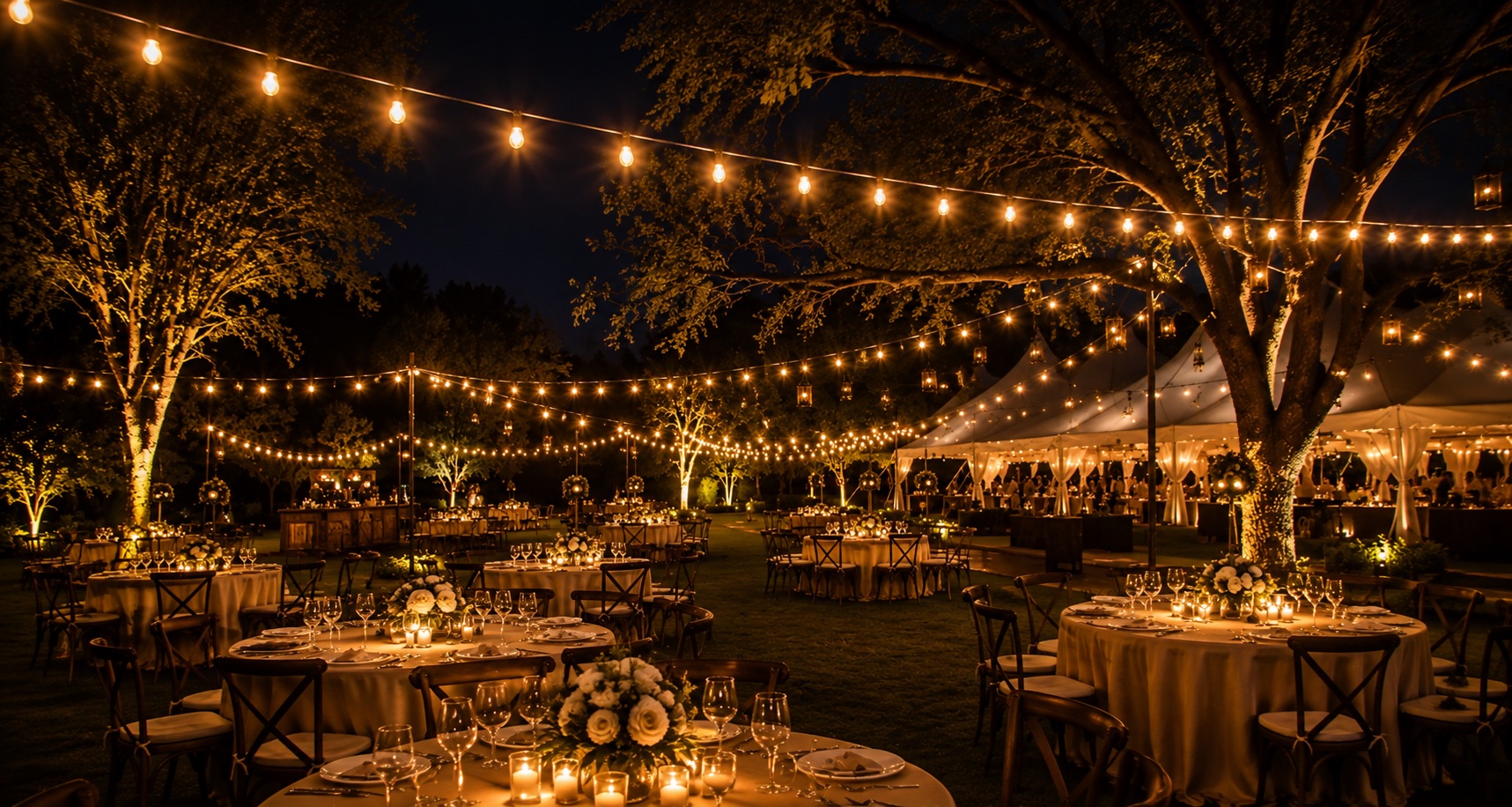
Warm overhead lighting creates inviting outdoor spaces.
Bistro Lighting Works Wherever Warmth and Definition Are Needed
The same lighting technique can support a romantic wedding or a commercial patio, but the design, installation, spacing, and operating requirements should reflect the purpose of the space.
Wedding Receptions
Create a romantic overhead canopy above dining, dancing, cocktail areas, and outdoor reception spaces.
Restaurants & Patios
Add welcoming evening illumination while reinforcing the visual identity of outdoor dining environments.
Courtyards & Gardens
Connect landscaping, architecture, pathways, tables, and gathering areas with continuous warm light.
Tented Events
Layer overhead string lighting with chandeliers, uplighting, and other event lighting for a complete reception design.
Resorts & Hotels
Transform terraces, pool decks, lawns, courtyards, and hospitality spaces into polished nighttime environments.
Private Events
Create an intimate atmosphere for celebrations, dinners, parties, anniversaries, and special outdoor gatherings.
Bistro Lighting Orlando Layout Ideas That Shape the Entire Space
The layout of professional bistro lighting in Orlando determines much more than where bulbs are placed. The pattern overhead affects the scale of the space, guest sightlines, photography, dining areas, dance floors, and how naturally separate event zones feel connected.
The strongest design usually follows the architecture and purpose of the venue rather than forcing the same installation pattern into every courtyard, patio, lawn, or reception.
Start With the Venue Then Choose the Pattern
A narrow restaurant patio may benefit from clean parallel runs, while a large wedding lawn may feel more intimate with a full overhead canopy. Courtyards can often support zig-zag or perimeter patterns that reinforce the existing architecture.
Fixture spacing, anchor locations, cable direction, and bulb density should all support the way guests move through the event.
Choose the layout after identifying dining areas, dance floors, entrances, bars, stages, and primary photo locations. Lighting should help organize the space—not compete with it.
Overhead Lighting Can Create an Outdoor Ceiling
One of the biggest advantages of string lighting is its ability to create visual enclosure without walls. The pattern above guests gives outdoor environments structure, warmth, and a sense of intimacy after sunset.
This is especially valuable for wedding lawns, hotel courtyards, terraces, gardens, and open-air hospitality spaces.
Choose the Pattern That Fits the Experience
No single bistro lighting layout is best for every venue. The right choice depends on available anchor points, venue dimensions, event flow, and the visual result you want to create.
Parallel Runs
Straight rows of evenly spaced string lights create a clean, organized appearance that works especially well over patios, long dining areas, restaurant terraces, and rectangular event spaces.
Best For- Restaurant patios
- Long dining layouts
- Tented events
Zig-Zag Lighting
Alternating diagonal runs add movement and visual interest while covering irregular spaces without creating a heavy overhead canopy.
Best For- Courtyards
- Patios
- Casual outdoor receptions
Full Canopy
Multiple closely spaced runs create a luminous ceiling above guests and produce one of the most immersive bistro lighting experiences.
Best For- Wedding receptions
- Large dining areas
- Luxury outdoor events
Perimeter Lighting
Lighting installed around the edge of a space defines boundaries, architecture, trees, fences, or structures without filling the entire area overhead.
Best For- Garden events
- Pool decks
- Outdoor lounges
Radial Design
String lights extend outward from a central anchor point, creating a dramatic focal pattern that naturally draws attention toward the center of the event.
Best For- Dance floors
- Central courtyards
- Feature trees or poles
The Same Lights Can Create Very Different Atmospheres
Romantic & Immersive
Wedding bistro lighting often uses warmer bulb spacing and fuller overhead coverage to create intimacy across dining and dancing areas.
Explore the Wedding Lighting Orlando Guide →Structured & Welcoming
Restaurant, resort, and hotel installations often prioritize clean geometry, guest comfort, durability, and long-term visual consistency.
Relaxed & Personal
Smaller celebrations can use simple overhead patterns to create a warm atmosphere without requiring a large production footprint.
Bistro Lighting Orlando From Design to Installation
Professional bistro lighting in Orlando begins long before the first strand is installed. Every project should be planned around the venue layout, guest flow, attachment locations, available power, architectural features, and the atmosphere the lighting is intended to create.
Whether the installation is for a wedding reception, restaurant patio, hotel courtyard, private celebration, or corporate event, thoughtful planning helps create balanced spacing, clean cable lines, reliable operation, and an elegant finished appearance.
A Lighting Plan Creates A Better Guest Experience
A professional bistro lighting layout determines cable direction, attachment points, bulb spacing, fixture height, dimming zones, and power distribution before installation begins.
Planning these details in advance helps the finished lighting feel like part of the venue instead of temporary equipment added afterward.
Seven Steps to Beautiful Bistro Lighting
Installation complexity varies by venue, but a structured process helps ensure that the final lighting is attractive, coordinated, and ready before guests arrive.
Define the Experience
Review the venue, event type, guest count, event schedule, desired atmosphere, and the areas that should receive overhead lighting.
Evaluate the Venue
Identify buildings, trees, poles, structural supports, electrical access, walkways, landscaping, and other conditions that influence the lighting design.
Design the Lighting Pattern
Establish cable direction, string spacing, attachment locations, lighting zones, and visual relationships between dining, dancing, and gathering areas.
Select the Lighting System
Match bulbs, cable systems, dimming controls, support hardware, power distribution, and other equipment to the venue and production requirements.
Install & Align the Runs
Install approved support hardware, position the lighting, maintain consistent spacing, and align each run so the finished pattern feels intentional.
Test the Lighting at Night
Confirm brightness, dimming, coverage, sightlines, electrical operation, and how the lighting appears under realistic evening conditions.
Complete the Final Walkthrough
Review the full lighting environment before guests arrive and make final adjustments to brightness, alignment, zones, and presentation.
Beautiful Bistro Lighting Requires More Than Hanging Bulbs
A polished installation depends on spacing, structural planning, power distribution, lighting control, weather considerations, guest circulation, photography, and the visual relationship between the lighting and the venue.
For weddings, the lighting should also coordinate with ceremony design, reception décor, entertainment, and photography. Explore the Wedding Lighting Orlando Guide for a broader look at how each lighting layer works together.
The best bistro lighting installations feel effortless. Guests notice the atmosphere and warmth of the space—not the support hardware, cables, or electrical system behind it.
Lighting Should Work With Every Production Partner
Venue Team
Confirm access, attachment restrictions, approved structures, electrical requirements, installation windows, and removal schedules.
Wedding Planner
Coordinate guest flow, timeline, décor placement, ceremony areas, reception zones, and production priorities.
Photography & Video
Consider primary camera angles, first dances, entrances, portraits, and important background views.
Entertainment
Coordinate lighting around stages, DJs, bands, dance floors, speakers, and entertainment power requirements.
Related TYLERLIGHT Event Lighting Resources
Plan ceremony lighting, reception lighting, GOBO projection, first-dance effects, and complete wedding lighting design.
Explore lighting design for conferences, galas, branded events, stages, venues, and corporate productions.
Learn about complete professional lighting services for weddings, corporate events, venues, and special productions.
Wedding Bistro Lighting Orlando Creates an Intimate Reception Under the Stars
Professional wedding bistro lighting in Orlando can transform an open lawn, garden, courtyard, patio, or tented reception into a warm and visually connected celebration after sunset.
The strongest designs do more than illuminate tables. They help define dining areas, frame the dance floor, connect cocktail spaces, support photography, and give the entire reception a cohesive nighttime atmosphere.
Light the Reception Around the Moments That Matter
Wedding lighting should support the natural rhythm of the evening. Guests may arrive during daylight, dine at sunset, experience speeches and formal dances after dark, and finish the evening with a more energetic dance-floor atmosphere.
Bistro lighting provides a consistent visual layer throughout those transitions while allowing other lighting elements to become more or less prominent as the reception evolves.
Design the overhead lighting around the reception floor plan first. Tables, dance floor, entertainment, bars, entrances, and photography zones should all influence the final string-light layout.
Build the Lighting Around How Guests Experience the Reception
Every wedding venue has different architecture and production requirements, but these six areas usually have the greatest impact on the finished experience.
Dining Areas
Provide comfortable overhead illumination that allows guests to see food, décor, and one another without making the reception feel overly bright.
Dance Floor
Use surrounding bistro lighting to frame the dance floor while allowing dedicated dance-floor fixtures to create additional energy.
First Dance
Maintain an elegant background around the couple so photography and video capture a polished, dimensional reception environment.
Cocktail Spaces
Connect bars, lounges, patios, and gathering areas so the entire venue feels visually related rather than divided into separate zones.
Walkways & Entrances
Help guests move naturally between ceremony, cocktail hour, dining, and reception spaces with clearly defined illuminated paths.
Photography
Consider important camera directions so the overhead pattern becomes a beautiful background rather than a distracting visual element.
Bistro Lighting Works Best As Part of a Complete Lighting Design
String lighting creates the ambient foundation. Other lighting layers can then emphasize architecture, décor, people, and important wedding moments.
Bistro Lighting
Establishes the warm overhead atmosphere and visually connects the reception space.
Architectural Uplighting
Adds dimension to walls, columns, trees, tent interiors, and venue architecture.
Pin Spotting
Highlights cakes, centerpieces, floral arrangements, sweetheart tables, and other important décor.
Dance Floor Lighting
Introduces movement, color, and energy later in the evening without sacrificing the warm reception atmosphere.
Bistro Lighting Orlando For Restaurants, Resorts & Hospitality Spaces
Professional bistro lighting in Orlando can transform restaurant patios, hotel courtyards, resort terraces, pool decks, and outdoor hospitality spaces into warm, inviting nighttime environments.
Commercial installations require more than attractive bulb patterns. The lighting should support guest comfort, brand atmosphere, operational needs, durability, access, power distribution, and long-term visual consistency.
Good Bistro Lighting Becomes Part of the Brand Experience
A restaurant patio or resort courtyard should feel just as intentional after sunset as it does during the day. Bistro lighting can reinforce architecture, landscape design, dining zones, and the overall personality of the property.
Clean spacing, consistent color temperature, controlled brightness, and carefully selected attachment points help the installation look permanent and polished instead of temporary.
Commercial lighting should support the guest experience without becoming the visual distraction. The best installations create atmosphere first.
Six Things Hospitality Installations Need to Get Right
Guest Comfort
Provide enough illumination for dining and circulation without creating glare or making the outdoor space feel overly bright.
Brand Atmosphere
Match the lighting style, warmth, spacing, and visual density to the restaurant, hotel, resort, or venue identity.
Durability
Permanent and long-term installations should use appropriate cabling, support systems, fixtures, and weather-rated components.
Operational Access
Lighting should not interfere with service paths, maintenance, deliveries, umbrellas, awnings, doors, landscaping, or equipment.
Lighting Control
Dimming and zoning can help properties adjust brightness for dining, private events, closing hours, and different seasons.
Visual Consistency
Straight cable runs, consistent bulb spacing, and clean anchor points keep large commercial installations looking refined.
Bistro Lighting Works Across Many Commercial Outdoor Spaces
Each environment requires a slightly different approach to layout, brightness, installation, and control.
Restaurant Patios
Create comfortable evening dining while defining tables, walkways, architectural edges, and outdoor seating zones.
Hotel Courtyards
Add warmth to multipurpose gathering areas used for receptions, cocktails, dining, private events, and guest social spaces.
Resort Terraces
Extend the usable atmosphere of terraces, lawns, pool decks, and outdoor entertainment spaces after sunset.
Event Venues
Create a flexible ambient layer that supports weddings, corporate events, galas, dinners, and private celebrations.
Rooftop Spaces
Introduce warm overhead definition to open rooftop environments while preserving views and architectural character.
Pool & Lounge Areas
Add atmosphere to seating, dining, bar, and gathering areas without relying only on architectural or landscape fixtures.
Permanent and Event Lighting Require Different Planning
Designed for Daily Use
Permanent hospitality lighting should consider long-term durability, service access, electrical infrastructure, maintenance, weather exposure, and consistent appearance throughout the year.
- Weather-rated equipment
- Permanent attachment planning
- Maintenance access
- Dimming and scheduling
- Consistent operating appearance
Designed Around the Event
Temporary bistro lighting is planned around a specific floor plan, event schedule, guest flow, décor, production needs, and installation window.
- Event-specific layout
- Temporary support systems
- Fast installation and removal
- Coordination with other vendors
- Event-night lighting control
Choosing the Right Bistro Lighting Layout
No two outdoor venues should be lit exactly the same. A courtyard, wedding lawn, restaurant patio, resort terrace, and private estate each present different structural opportunities and design challenges.
Professional bistro lighting in Orlando should be planned around architecture, guest circulation, landscaping, dining areas, entertainment, photography, and the way the space will actually be experienced after sunset.
Every Great Installation Begins With the Space
Rather than selecting a lighting pattern first, begin by studying the venue itself. Buildings, trees, permanent poles, landscape features, patios, rooftops, open lawns, and approved structural supports all influence what layouts are practical.
Professional planning also considers installation access, electrical availability, guest paths, décor, stages, bars, service areas, and how the lighting will coordinate with other production elements.
The strongest design is usually the one that follows the natural geometry of the venue rather than forcing a decorative pattern into a space that was never meant to support it.
Different Spaces Need Different Lighting Strategies
Garden Venues
Trees, open lawns, pathways, and landscape features can support overhead canopies, perimeter runs, and warm gathering zones.
Restaurant Patios
Parallel runs often work well because they reinforce the existing architecture while keeping outdoor dining areas clean and orderly.
Courtyards
Zig-zag, diagonal, and crisscross layouts can help define the center of the space while maintaining openness around the edges.
Private Estates
Larger properties may combine overhead strands, perimeter lighting, pathway illumination, and feature lighting across multiple event zones.
Six Questions to Answer Before Installing Bistro Lighting
Answering these questions early helps determine the lighting pattern, cable direction, fixture height, support requirements, and electrical plan.
Where Will Guests Gather?
Identify dining areas, dance floors, bars, lounges, ceremony spaces, cocktail areas, and the locations guests will use most after sunset.
What Can Support the Lighting?
Determine which buildings, poles, trees, engineered supports, or approved attachment points can safely support the planned runs.
Will Lighting Interfere With Production?
Review stage locations, speakers, tents, projection, décor, floral installations, entertainment, and vendor access before finalizing cable paths.
How Will the Space Be Photographed?
Important camera angles should be considered so the string-light pattern becomes a beautiful background rather than a distracting element.
Is the Installation Temporary or Permanent?
Event installations and long-term commercial systems require different approaches to support hardware, maintenance, access, and electrical infrastructure.
Does the Venue Need Dimming?
Dimming and zoning allow the lighting atmosphere to change between arrival, dinner, speeches, dancing, and late-evening use.
Match the Layout to the Type of Event
Prioritize Atmosphere & Photography
Wedding layouts often emphasize the reception floor plan, dining, first-dance area, guest experience, and photography.
Wedding Lighting Guide →Prioritize Flow & Brand Experience
Corporate and hospitality events may require cleaner geometry, branded environments, stages, presentation areas, and guest circulation planning.
Corporate Event Lighting Guide →Prioritize Consistency & Daily Use
Restaurants, resorts, and commercial properties often need lighting that remains visually consistent while supporting regular operations and maintenance.
Bistro Lighting Orlando Services →Common Bistro Lighting Mistakes to Avoid
Beautiful bistro lighting depends on thoughtful planning long before the first cable is installed. Avoiding a few common design mistakes can make the difference between a professional installation and one that feels unfinished or distracting.
Whether you’re planning a wedding, restaurant patio, corporate event, or private celebration, these recommendations help create a cleaner, more functional lighting design.
Installing Lights Too Low
Lights that hang too low interfere with guest movement, photography, decorations, and the overall feeling of openness.
Ignoring Guest Flow
Always consider entrances, walkways, dining areas, bars, and dance floors before choosing the direction of lighting runs.
Using Inconsistent Spacing
Uneven cable spacing and irregular bulb placement immediately reduce the clean architectural appearance of the installation.
Forgetting Photography
Professional photographers depend on attractive backgrounds. Lighting should enhance important camera angles rather than compete with them.
Adding Too Much Brightness
Bistro lighting should create atmosphere. Over-lighting the venue removes the warmth and intimacy guests expect from outdoor events.
Poor Support Planning
Trees, poles, buildings, and engineered supports should always be evaluated before installation begins to maintain safety and clean cable lines.
Ignoring Other Lighting
Bistro lighting performs best alongside uplighting, dance floor lighting, GOBO projection, and architectural lighting instead of replacing them.
Planning Too Late
Outdoor lighting should be designed early in the event planning process to coordinate with florals, tents, staging, entertainment, and venue logistics.
Continue Planning Your Event Lighting
Learn more about complete event lighting design by exploring our Wedding Lighting Guide, Corporate Event Lighting Guide, or discover how custom GOBO Projection adds branding and personalization to your event.
Bistro Lighting Safety Power & Weather Planning
Professional bistro lighting in Orlando has to perform in real outdoor conditions. Electrical capacity, weather exposure, attachment points, cable paths, support hardware, guest circulation, and venue restrictions should all be evaluated before installation.
Florida weather also makes advance planning especially important. Temporary event lighting and permanent outdoor installations may face wind, rain, heat, humidity, and changing conditions throughout the year.
Beautiful Lighting Still Has to Work Safely Behind the Scenes
The most successful installations hide the technical complexity from guests. Support lines, electrical distribution, cable protection, mounting hardware, and control equipment should be planned so the finished environment looks clean while remaining functional.
Temporary event installations also need to coordinate with venue policies, load-in schedules, other vendors, and areas where guests or staff will be walking throughout the event.
Six Details That Need Professional Planning
Electrical Load
Lighting circuits, dimmers, extension systems, and other event equipment should be planned around the available electrical capacity of the venue.
Outdoor-Rated Equipment
Components used outdoors should be appropriate for the intended environment and expected exposure to moisture and weather.
Secure Attachment
Buildings, poles, trees, and support systems should be evaluated before becoming part of the lighting installation.
Cable Routing
Electrical and support cables should avoid creating unnecessary hazards across walkways, service areas, guest paths, and vendor access points.
Fixture Height
Lighting height should maintain comfortable guest clearance while still creating the desired visual scale and overhead atmosphere.
Venue Approval
Hotels, resorts, restaurants, and event venues may have specific rules governing attachments, electrical connections, rigging, installation access, and removal.
Outdoor Bistro Lighting Needs A Weather Plan
Weather decisions should be made with the venue and production team before event day whenever possible.
Rain
Outdoor electrical equipment and connections should be appropriate for the installation environment and protected according to the production plan.
Wind
Large suspended spans and temporary support systems should account for changing wind conditions and venue-specific restrictions.
Heat & Humidity
Long outdoor operating periods in Central Florida can place additional demands on equipment, connections, and installation materials.
Backup Plan
Outdoor weddings and special events should have a clear decision process for relocating, modifying, delaying, or removing lighting if conditions become unsuitable.
Temporary and Permanent Systems Have Different Requirements
Built Around a Specific Event
Temporary lighting must fit within a defined load-in window, event schedule, floor plan, guest circulation pattern, and removal timeline.
- Event-specific installation
- Temporary support locations
- Vendor coordination
- Protected guest pathways
- Planned removal schedule
Designed for Long-Term Operation
Permanent restaurant, resort, venue, and hospitality installations require greater consideration for long-term electrical service, attachment methods, maintenance, weather exposure, and accessibility.
- Long-term attachment planning
- Permanent electrical strategy
- Maintenance access
- Outdoor durability
- Consistent daily appearance
Confirm the Technical Details Before Installation Day
- Venue installation approval
- Available electrical service
- Approved attachment points
- Required lighting height
- Guest and vendor pathways
- Outdoor equipment requirements
- Weather contingency plan
- Installation access window
- Removal schedule
- Dimming and control requirements
- Coordination with tents and décor
- Final evening lighting check
Bistro Lighting Cost in Orlando What Affects the Final Investment?
The cost of professional bistro lighting in Orlando depends on the size of the space, installation method, number of lighting runs, attachment points, electrical access, event duration, labor, and whether the system is temporary or permanent.
A small restaurant patio may require a very different production plan than a large wedding lawn, resort courtyard, or multi-zone corporate event. The most useful budget starts with the venue and desired experience rather than a simple price per strand.
Price the Installation Around the Space
Bistro lighting is not simply a collection of decorative bulbs. Professional installation can involve support hardware, cable systems, temporary poles, dimming, power distribution, labor, venue access, installation time, testing, and removal.
Because those requirements change from venue to venue, accurate pricing usually begins with a floor plan, site photos, venue details, or an on-site review.
Start by identifying the most important areas to illuminate. A focused lighting plan over dining, dancing, and gathering zones can often create more impact than trying to cover every square foot.
Six Details That Influence Bistro Lighting Pricing
Coverage Area
Larger patios, lawns, courtyards, tents, and event spaces usually require more cable runs, equipment, labor, and installation time.
Layout Complexity
Simple parallel runs are typically easier to install than dense canopies, radial designs, multiple zones, or complex irregular patterns.
Attachment Points
Existing buildings, poles, or approved structures may simplify installation, while open spaces can require temporary or permanent support systems.
Electrical Access
Available circuits, power distance, dimming, distribution, and control requirements can influence equipment and labor.
Installation Access
Tall structures, limited load-in windows, lifts, difficult terrain, or restricted venue access can increase installation complexity.
Duration & Removal
Temporary event lighting may include installation and removal, while long-term commercial systems require planning for durability and maintenance.
Think in Terms of Project Scope, Not Strand Count
Two installations with the same number of bulbs can require very different amounts of planning and labor depending on the venue.
Small Patio or Intimate Event
A smaller space with nearby power and existing attachment points may allow for a straightforward lighting plan with fewer installation variables.
- Limited coverage area
- Existing structures
- Simple lighting pattern
- Short cable runs
Wedding or Courtyard Reception
Medium-size events often involve several lighting zones, coordination with décor and entertainment, and a more detailed installation plan.
- Multiple guest zones
- Custom canopy or zig-zag layout
- Dimming control
- Vendor coordination
Resort, Corporate or Large Venue
Large properties may require extensive cable systems, custom support structures, multiple power locations, staged installation, and detailed venue coordination.
- Large coverage area
- Multiple lighting zones
- Custom support systems
- Complex installation access
Temporary vs. Permanent Bistro Lighting Costs
Built for a Specific Event
Temporary pricing typically reflects equipment rental, delivery, installation, power distribution, testing, event duration, and removal after the event.
- Event-specific design
- Temporary support hardware
- Installation labor
- Event operation if required
- Removal after the event
Built for Long-Term Use
Permanent systems often involve more durable equipment, permanent support methods, electrical infrastructure, control systems, and long-term maintenance considerations.
- Permanent attachment strategy
- Weather-rated equipment
- Long-term electrical planning
- Dimming or scheduling controls
- Maintenance access
Spend the Budget Where Guests Will Feel It Most
Not every part of a venue needs the same level of lighting. The highest-value areas are typically dining, dancing, guest gathering, entrances, and the primary architectural or photographic backgrounds.
For weddings, that may mean prioritizing the reception lawn and dance floor. For hospitality properties, it may mean concentrating on the dining patio, courtyard, or high-traffic social areas.
Prioritize Key Zones
Focus lighting investment where guests spend the most time instead of trying to illuminate every edge of the property.
Use Existing Architecture
Approved buildings, poles, and structures can sometimes reduce the need for additional temporary support systems.
Plan Early
Early coordination helps avoid last-minute changes involving décor, tents, entertainment, electrical access, and venue restrictions.
Combine Lighting Layers
Bistro lighting can work alongside uplighting, GOBO projection, architectural lighting, and dance-floor effects rather than carrying the entire lighting design alone.
Bistro Lighting Orlando Frequently Asked Questions
Professional bistro lighting in Orlando can be used for weddings, patios, courtyards, restaurants, resorts, private events, corporate gatherings, and permanent hospitality installations.
These answers cover some of the most common questions people ask when planning overhead string lighting for outdoor spaces.
Good Bistro Lighting Starts With the Right Questions
Venue shape, anchor points, power, guest flow, weather exposure, installation height, and event purpose all influence the final lighting plan.
The earlier these details are reviewed, the easier it is to create a clean and intentional installation.
If you already have a floor plan, venue photos, or layout drawing, those materials can help identify possible lighting patterns before an on-site review.
What is bistro lighting?
Bistro lighting uses suspended strings of decorative bulbs to create warm overhead illumination across patios, courtyards, gardens, lawns, tents, restaurants, and outdoor event spaces.
Is bistro lighting the same as string lighting?
The terms are often used interchangeably. Bistro lighting usually refers to professional overhead string-light installations designed to create atmosphere and visually define a space.
Can bistro lighting be used for weddings?
Yes. Bistro lighting is especially popular for outdoor wedding receptions, garden venues, courtyards, tents, patios, and open-air dining areas because it creates warmth and a strong visual ceiling.
Can bistro lighting be installed permanently?
Yes. Restaurants, resorts, hotels, event venues, and hospitality properties often use permanent systems, but long-term installations require different planning for power, support, durability, maintenance, and weather exposure.
How high should bistro lights be installed?
Installation height depends on venue dimensions, guest clearance, layout, attachment points, photography, nearby structures, and local or venue requirements. There is no single height that works for every space.
Can bistro lighting be dimmed?
Many professional systems can be designed with dimming and zoning so brightness can change between guest arrival, dinner, speeches, dancing, and late-evening use.
Does bistro lighting work in rain?
Outdoor installations should use equipment appropriate for the intended environment and be planned around weather exposure, electrical protection, venue requirements, and event contingencies.
Can bistro lighting be attached to trees?
Trees may sometimes be part of a lighting plan, but attachment suitability depends on the tree, venue rules, span length, cable tension, and installation method. Each location should be reviewed individually.
What layouts are most popular?
Common layouts include parallel runs, zig-zag patterns, full canopies, perimeter lighting, and radial designs. The best option depends on the architecture and guest experience rather than appearance alone.
How much does bistro lighting cost?
Pricing depends on the size of the area, layout complexity, attachment points, installation height, electrical access, equipment, labor, event duration, and whether the installation is temporary or permanent.
How early should bistro lighting be planned?
Early planning is recommended, especially when lighting must coordinate with tents, florals, décor, staging, entertainment, venue access, or other production vendors.
Can bistro lighting be combined with other event lighting?
Yes. Bistro lighting is often combined with uplighting, GOBO projection, architectural lighting, dance-floor lighting, pin spotting, stage lighting, and special effects to create a layered event environment.
Bistro Lighting Orlando Final Planning Takeaways
Professional bistro lighting in Orlando is most successful when the lighting design follows the venue, guest experience, architecture, and purpose of the space.
The bulbs themselves are only one part of the finished result. Layout, spacing, attachment points, power, dimming, weather planning, installation height, and coordination with other event elements all contribute to the atmosphere guests ultimately experience.
Five Things to Remember When Planning Bistro Lighting
Start With the Venue
Let the architecture, floor plan, guest flow, and available attachment points guide the lighting layout.
Design for Atmosphere
Bistro lighting should create warmth and visual structure rather than simply adding brightness.
Plan the Technical Details
Power, installation height, cable paths, supports, dimming, and weather exposure should be considered before installation.
Coordinate the Lighting Layers
String lighting works best when it complements uplighting, architectural lighting, GOBO projection, dance-floor lighting, and other event elements.
Think About the Guest Experience
The finished installation should feel natural, comfortable, and intentional from arrival through the final moments of the evening.