
Wedding Lighting Orlando: The Complete Planning Guide
Wedding lighting in Orlando transforms ceremonies, receptions, first dances, outdoor venues, and luxury celebrations into unforgettable experiences. This complete TYLERLIGHT planning guide explains how professional wedding lighting, ceremony lighting, reception lighting, GOBO projection, bistro lighting, and cold sparks work together to create an elegant event.
Transform the Atmosphere Create a romantic environment shaped around your venue and vision
Elevate Every Detail Highlight florals, décor, architecture, tables, and focal points
Improve Photography Support beautiful photographs and video throughout the celebration
Create Lasting Moments Design visual transitions for entrances, dances, dining, and dancing
Professional Wedding Lighting in Orlando Creates the Entire Experience
A professionally designed wedding lighting plan transforms more than a venue—it shapes the atmosphere, guides attention, enhances photography, and creates unforgettable moments from the ceremony through the final dance.
Whether you’re planning an elegant ballroom reception, an outdoor garden ceremony, a luxury resort wedding, or an intimate celebration in Central Florida, thoughtful wedding lighting design helps every detail feel intentional and visually connected.
This complete Wedding Lighting Orlando Guide explains how ceremony lighting, reception lighting, bistro lighting, GOBO monograms, uplighting, pin spotting, dance floor lighting, and architectural lighting work together to create an extraordinary guest experience.
Professional planning always begins with the guest experience.
The most successful wedding lighting designs enhance emotion first, equipment second.
Wedding Planning Topics
Lighting should be designed before floral placement, entertainment setup, and final room layout—not after.
Professional Wedding Lighting in Orlando Creates the Feeling Long Before Guests Notice the Fixtures
Professional wedding lighting influences how every guest experiences your celebration. Before anyone notices the chandeliers, uplights, bistro lights, or GOBO projection, they notice the atmosphere the lighting creates.
A carefully designed wedding lighting plan guides attention naturally, enhances décor, improves photography, and creates emotional moments that remain memorable long after the wedding day.
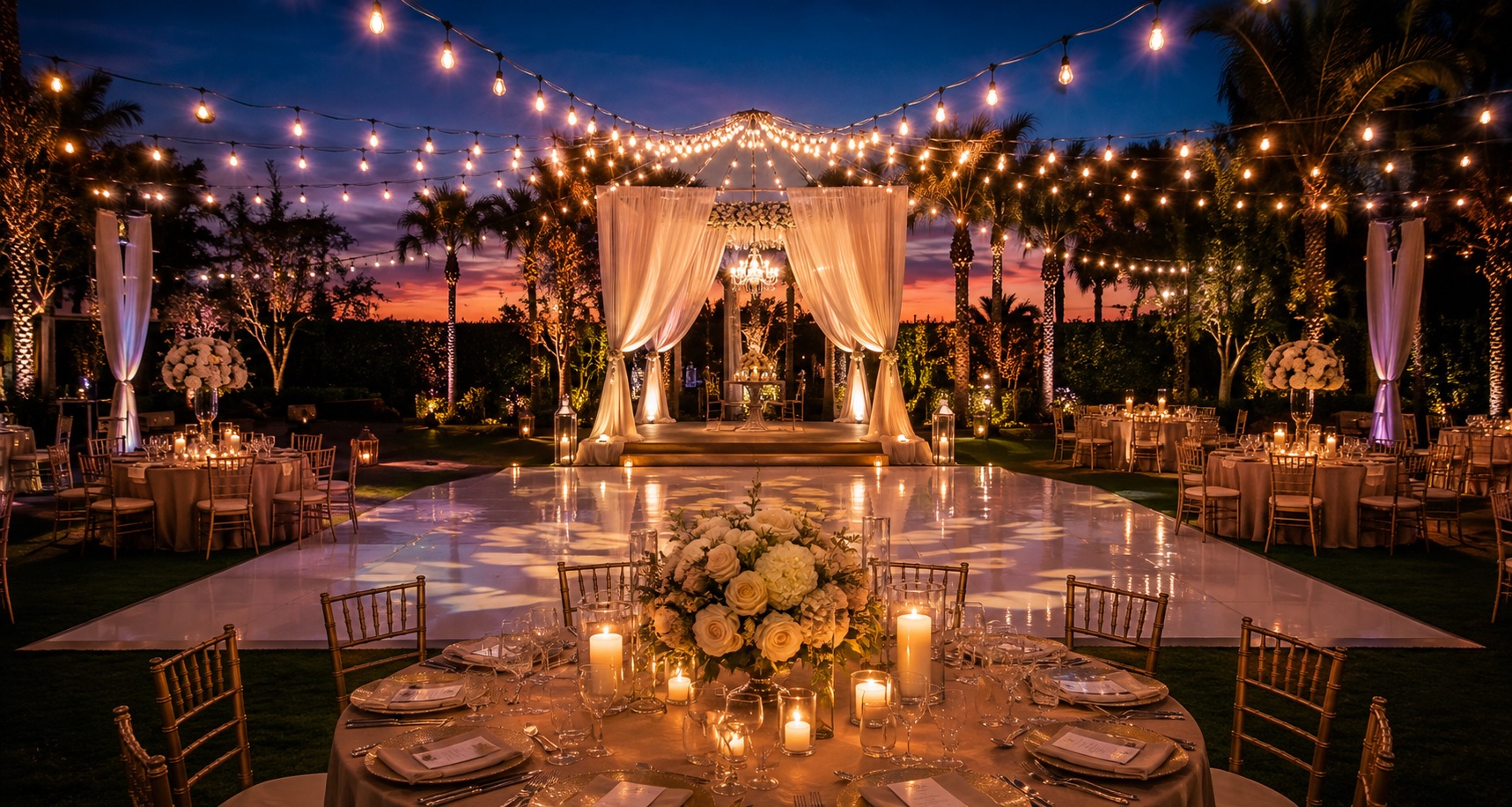
Lighting Creates an Experience, Not Simply Illumination.
Beautiful lighting quietly shapes every important wedding moment—from the processional and vows to dinner, speeches, photography, and the first dance. The strongest lighting designs never distract from the celebration—they elevate it.
Atmosphere
Create warmth, romance, elegance and visual depth throughout the venue.
Photography
Support photographers with balanced, flattering light for every key moment.
Guest Experience
Guide attention naturally while making guests feel comfortable and engaged.
Lasting Memories
Professional lighting transforms beautiful venues into unforgettable celebrations.
Design the Ceremony Around the Couple Not the Equipment
The ceremony is the emotional centerpiece of every wedding. Every lighting decision should reinforce the couple’s story while remaining subtle, elegant, and natural. Guests should focus on the vows—not the equipment.
Professional ceremony lighting combines soft front lighting, architectural accents, floral highlighting, and carefully balanced ambient illumination that enhances both the guest experience and wedding photography.
Aisle Lighting
Create a welcoming path that guides guests toward the ceremony while maintaining elegant visual balance.
Altar & Floral Lighting
Subtle accent lighting highlights floral installations, arches, and focal décor without overpowering the ceremony.
Couple Lighting
Soft front lighting enhances natural skin tones for vows, rings, and emotional moments.
Architectural Lighting
Enhance gardens, waterfronts, chapels, ballrooms, and outdoor structures with elegant uplighting.
Guest Visibility
Guests should comfortably see the ceremony without excessive brightness or distraction.
Photography Support
Balanced lighting ensures photographers capture beautiful images without relying on harsh flash.
Wedding Lighting in Orlando creates a Reception Guests Never Want to Leave
Once the ceremony concludes, lighting shifts from creating emotion to creating atmosphere. Professional wedding reception lighting blends warm ambient illumination, architectural accents, dance floor effects, and decorative lighting into one seamless experience.
The best reception lighting evolves throughout the evening—supporting dinner conversations, speeches, first dances, photography, and finally an energetic celebration without feeling disconnected.
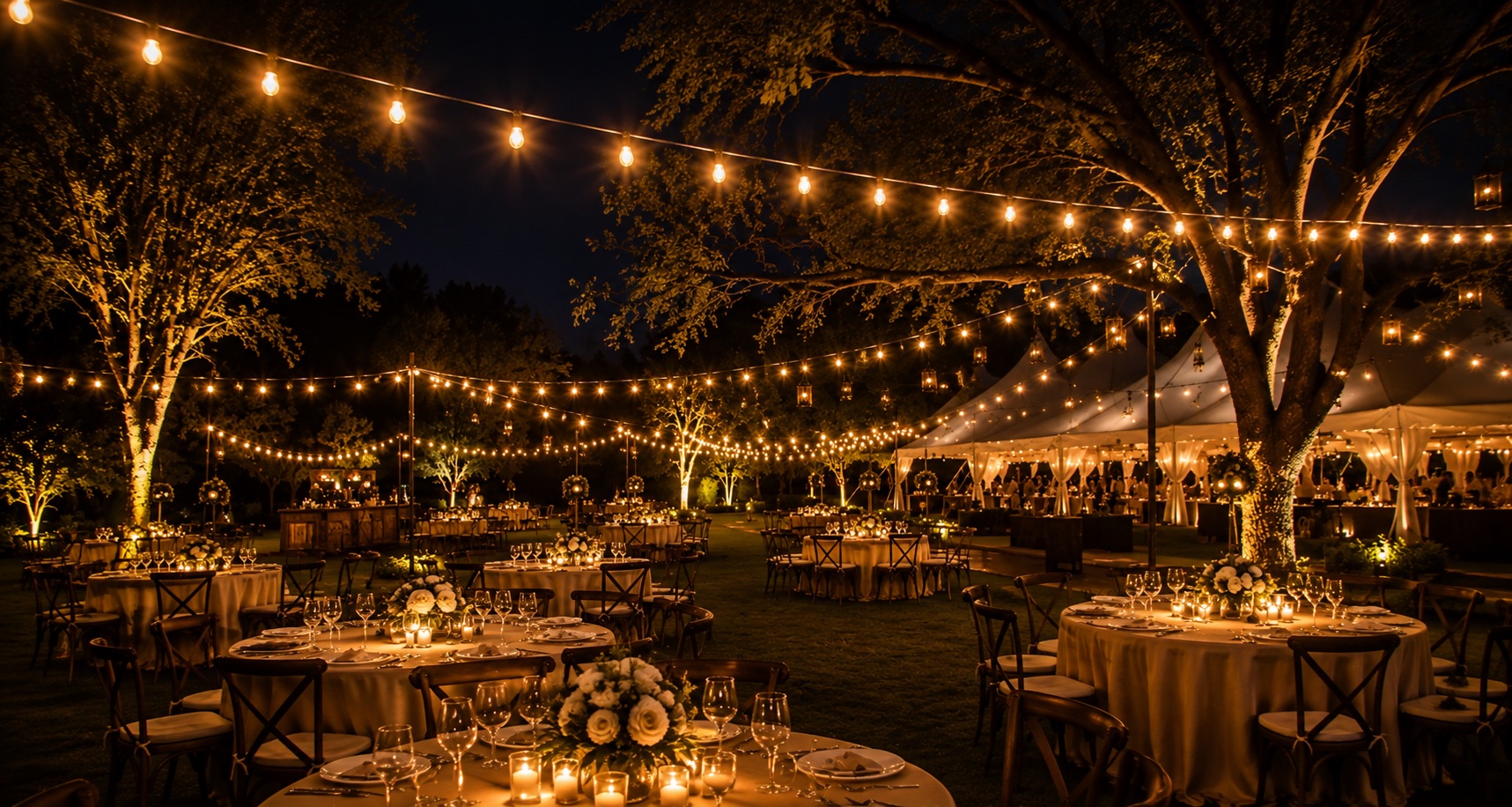
Layer Multiple Types of Light Together
Exceptional reception lighting isn’t produced by one fixture. The atmosphere comes from combining ambient light, architectural uplighting, bistro lighting, pin spotting, dance floor lighting, and carefully programmed transitions throughout the evening.
Ambient Lighting
Create warmth and comfortable overall illumination.
Architectural Uplighting
Define walls, columns and venue architecture.
Pin Spotting
Highlight cakes, centerpieces and floral details.
Dance Floor Lighting
Increase energy after formal events conclude.
Warm Dinner Atmosphere
Soft lighting encourages conversation while allowing guests to comfortably enjoy the reception.
Elegant Room Depth
Architectural lighting gives the ballroom dimension instead of leaving walls visually flat.
First Dance Focus
Directional lighting naturally draws every guest toward the couple without harsh spotlights.
Photography Support
Balanced lighting improves wedding photography and reduces reliance on flash.
Open Dancing Energy
Moving fixtures and programmed lighting scenes transform the room later in the evening.
Visual Consistency
Every lighting transition should feel intentional while maintaining the wedding’s overall design.
Custom Wedding GOBO Projection Creates a Signature Reception
A professionally designed wedding GOBO projection adds a custom signature to the reception while remaining elegant, clean, and fully integrated with the overall lighting design.
Initials, names, wedding dates, monograms, family crests, custom artwork, and decorative patterns can be projected onto ballroom walls, dance floors, drape, architectural surfaces, or scenic backdrops.
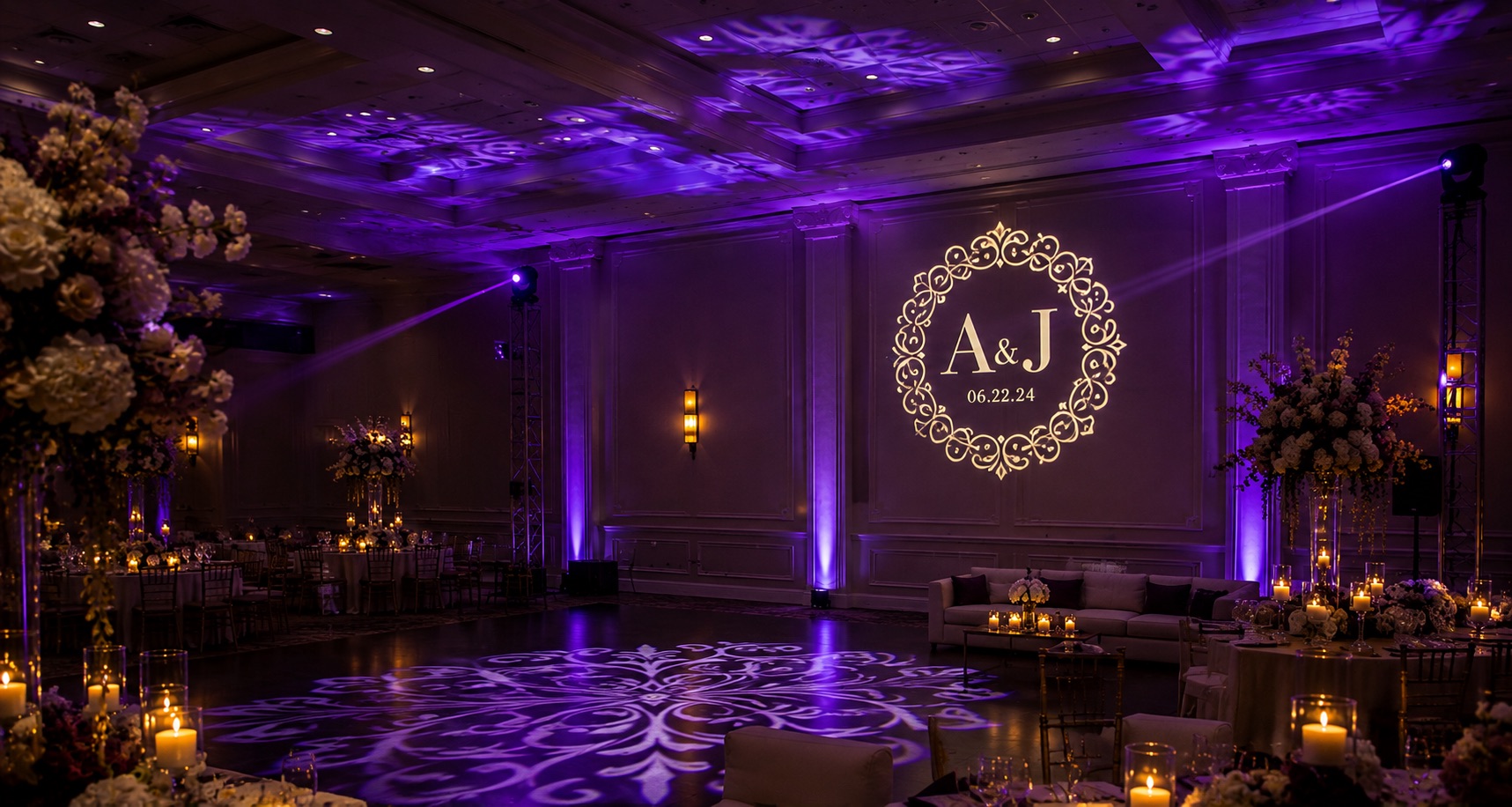
Make the Venue Feel Designed Around the Couple
Unlike temporary signage or freestanding décor, a custom projection can visually transform an existing surface without adding clutter to the room. The result feels intentional, polished, and highly personalized.
Placement matters. The strongest results consider viewing angles, projection distance, ballroom architecture, guest traffic, photography, dance-floor positioning, and the brightness of the surrounding lighting.
Luxury Detail Without Additional Décor
GOBO projection can personalize a reception while preserving valuable floor space and keeping the visual design clean.
Dance Floor Projection
Create a dramatic personalized focal point for the first dance, formal dances, and reception photography.
Ballroom Walls
Project a monogram or decorative pattern onto a large architectural surface where guests can see it throughout the evening.
Reception Entrances
Welcome guests with personalized names, initials, or artwork as they enter the celebration.
Photography Backdrops
Use projection as part of a photo wall, draped backdrop, scenic installation, or branded reception feature.
Four Details That Determine How the Projection Looks
Projection Surface
Smooth walls, drape, dance floors, scenic panels, and architectural surfaces each produce a different visual result.
Fixture Placement
The angle and distance of the fixture affect scale, sharpness, brightness, and possible guest shadows.
Artwork Design
Monograms should remain legible at the selected projection size and complement the wedding’s overall visual identity.
Ambient Lighting
Surrounding room brightness should be balanced so the GOBO remains visible without making the venue unnecessarily dark.
Transform Outdoor Weddings Into Evening Experiences
Few lighting elements create a more romantic atmosphere than professionally installed bistro lighting. Whether suspended over courtyards, patios, gardens, or outdoor receptions, string lighting adds warmth, elegance, and architectural definition after sunset.
Professionally designed overhead lighting also improves guest comfort by visually connecting dining areas, cocktail spaces, lounges, dance floors, and walkways into one cohesive celebration.
Create Warmth Above Every Guest
Unlike decorative lighting placed around the venue, overhead string lighting creates an architectural ceiling that makes large outdoor spaces feel intimate, welcoming, and complete.
Garden Weddings
Enhance natural surroundings while maintaining an elegant evening atmosphere.
Courtyards
Connect seating, dining, and dance areas with continuous overhead lighting.
Tented Receptions
Layer bistro lighting with chandeliers and uplighting for luxury reception design.
Outdoor Dining
Provide comfortable illumination without overwhelming the venue.
Every Bistro Lighting Installation Is Designed Around The Venue
Proper attachment points, spacing, cable routing, support structures, electrical access, and venue restrictions should all be considered before installation. Professional planning ensures the finished design appears elegant while remaining safe for guests throughout the celebration.
When The Music Starts, The Entire Room Should Transform
One of the biggest differences between ordinary receptions and unforgettable celebrations is the transition from dinner into dancing. Professional wedding dance floor lighting creates energy, excitement, and unforgettable moments without overwhelming the elegance established earlier in the evening.
Lighting scenes, intelligent moving fixtures, indoor cold sparks, color transitions, and spotlight programming work together to create a dramatic experience guests remember long after the reception ends.
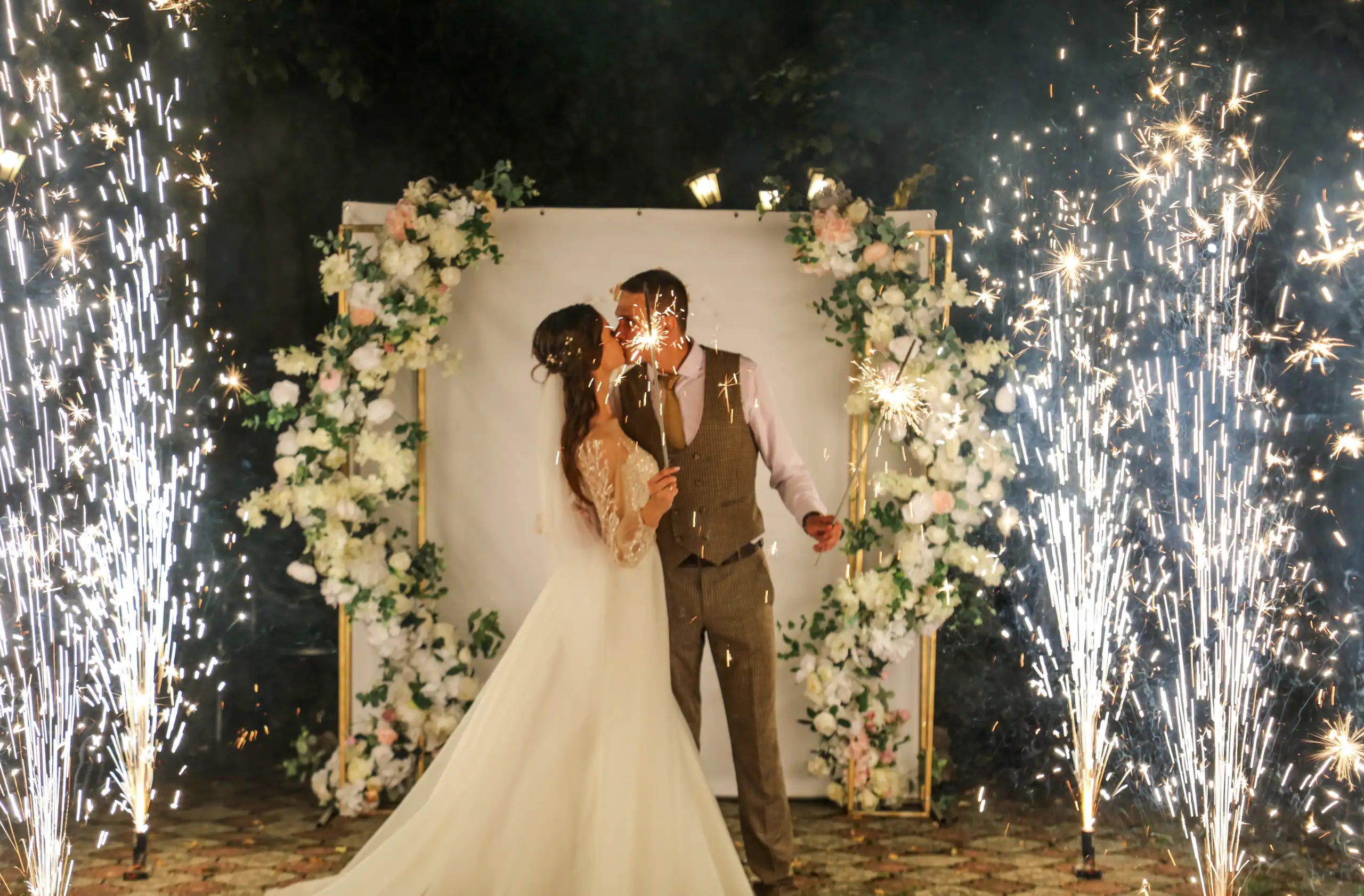
First Dance
Elegant spotlighting paired with indoor cold sparks creates breathtaking photographs and unforgettable memories.
Grand Entrance
Introduce the wedding party with synchronized lighting and dramatic visual effects.
Open Dancing
Moving lights transform the ballroom from elegant dining into a vibrant celebration.
Photography
Lighting effects should enhance photography—not compete with it.
“The most memorable weddings don’t become brighter… they become more exciting.”
Create One Beautiful Moment Every Guest Remembers
The first dance is one of the most photographed and emotionally significant moments of the wedding reception. Professional first dance lighting gives the couple a clear visual focus while preserving the warmth, atmosphere, and elegance of the surrounding ballroom.
A successful design combines flattering spotlighting, balanced room illumination, natural skin tones, and smooth transitions into parent dances and open dancing. The goal is not simply to make the dance floor brighter—it is to make the moment feel cinematic.
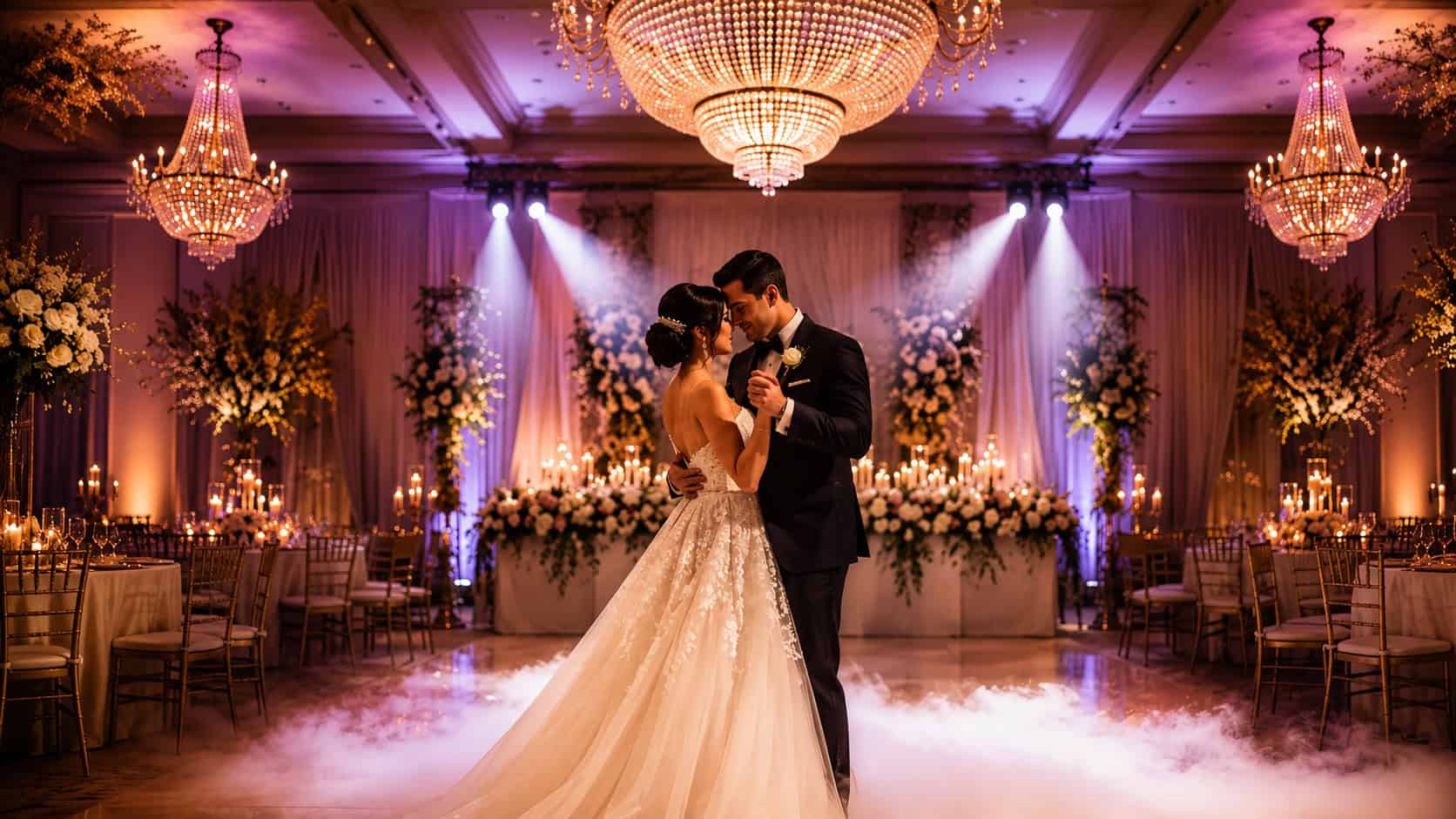
Keep the Couple at the Center of the Story
During the first dance, strong saturated colors, rapid movement, and uncontrolled beams can distract from the couple and create difficult conditions for photography and video.
TYLERLIGHT designs first dance scenes around soft, directional illumination that follows the couple naturally while maintaining depth throughout the reception venue.
Flattering Illumination
Soft front lighting helps preserve natural skin tones and reduces harsh shadows as the couple moves across the floor.
Background Separation
Gentle backlighting visually separates the couple from guests, décor, walls, and entertainment equipment.
Photography Support
Fixture placement should be coordinated with primary camera positions to support clear wedding photography and video.
Controlled Movement
Intelligent moving lights should remain subtle during the formal dance and become more energetic afterward.
Let the Lighting Evolve With the Evening
Professional wedding lighting should transition naturally from the couple’s entrance through the first dance, parent dances, dinner, speeches, and open dancing.
Plan the Wedding Lighting Before the Wedding Day
Professional wedding lighting planning begins long before installation day. Venue access, floor plans, power, entertainment, florals, photography, rigging, weather, and the wedding timeline all affect the final lighting design.
A structured production schedule gives every vendor time to coordinate while helping the couple make confident decisions without rushing through technical details during the final weeks before the wedding.
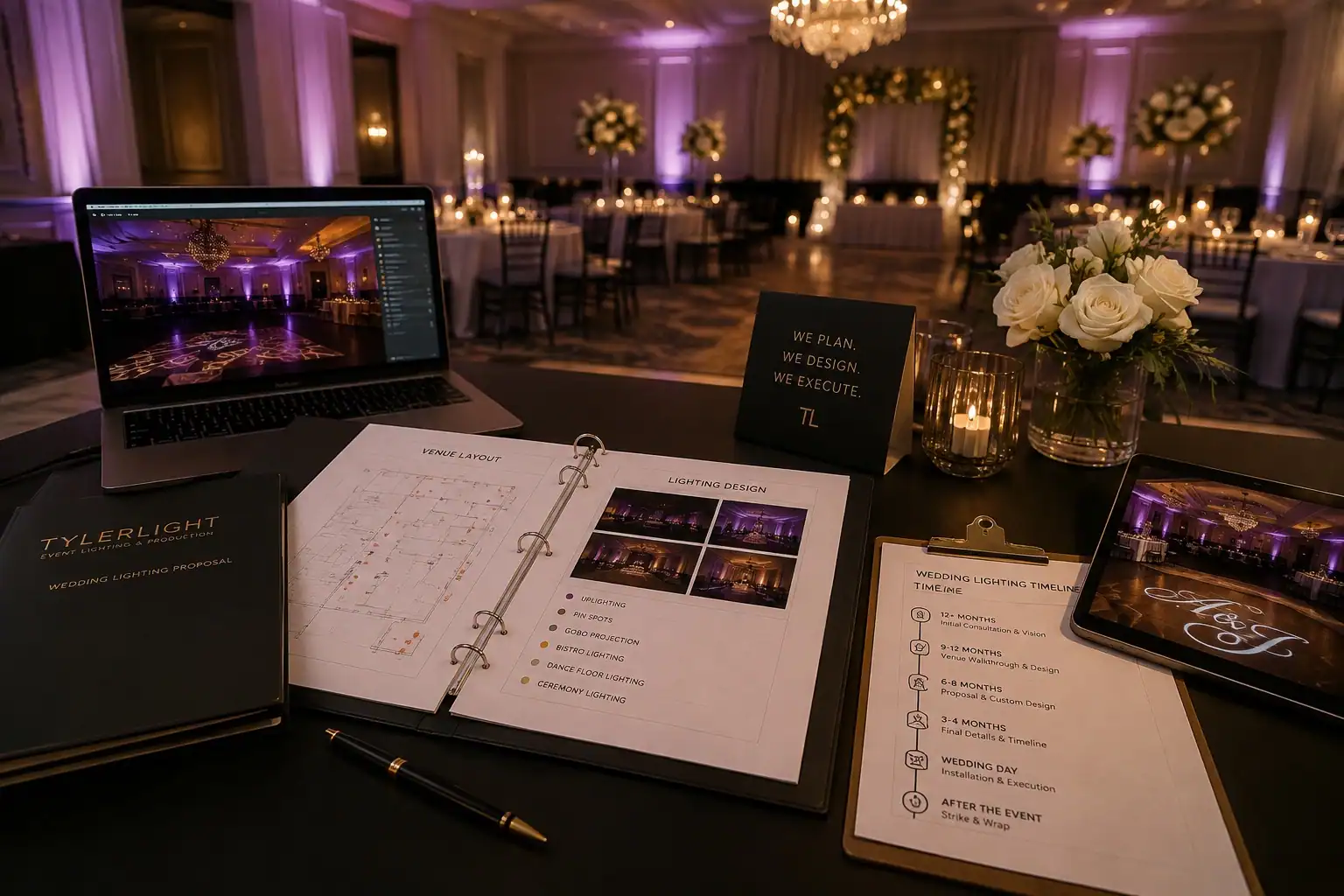
Design Every Lighting Scene Around the Wedding Timeline
Ceremony lighting, cocktail-hour ambience, reception uplighting, first-dance spotlighting, custom GOBO projection, cold sparks, and dance-floor effects should feel like parts of one coordinated design.
Early planning also allows TYLERLIGHT to identify venue restrictions, installation requirements, equipment positions, power needs, weather concerns, and possible conflicts with décor or entertainment.
Final lighting decisions should be based on the confirmed venue layout—not an early draft that may change after rentals, florals, staging, and entertainment are added.
Four Stages of Wedding Lighting Preparation
Exact timing varies by venue and production complexity, but this schedule provides a practical framework for most Orlando weddings.
Establish the Vision
Begin with the venue, wedding style, guest count, estimated floor plan, entertainment, décor direction, and the most important moments of the celebration.
- Select the wedding venue
- Define the desired atmosphere
- Identify indoor and outdoor event areas
- Discuss ceremony and reception priorities
- Reserve the lighting production date
Develop the Lighting Design
Build the preliminary lighting plan around the venue architecture, décor, entertainment, photography requirements, and guest experience.
- Review venue dimensions and ceiling height
- Select uplighting and color direction
- Plan GOBO artwork and projection placement
- Identify bistro-lighting attachment points
- Review first-dance and cold-spark concepts
Confirm the Final Production Plan
Update the design using the final floor plan, vendor locations, event schedule, décor details, and venue access information.
- Approve the final room layout
- Confirm cake and sweetheart-table locations
- Verify DJ, band, and stage positions
- Review photographer and videographer sightlines
- Approve GOBO artwork and effect timing
Execute and Test Every Scene
Complete final production checks, coordinate venue access, install equipment, focus fixtures, and rehearse the most important lighting transitions.
- Confirm installation and load-in times
- Test electrical power and control systems
- Focus ceremony and reception fixtures
- Rehearse first-dance and cold-spark cues
- Review final changes with the event team
Lighting Should Support Every Creative Partner
Professional wedding production works best when lighting is coordinated with the planner, venue, photographer, videographer, florist, rental company, DJ, band, caterer, and décor team.
Wedding Planner
Confirms the event timeline, vendor access, floor plan, cueing, and production priorities.
Venue Team
Provides power details, rigging policies, installation restrictions, access schedules, and safety requirements.
Florist and Décor Team
Coordinates focal areas, floral installations, draping, centerpieces, arches, and overhead décor.
Photography and Video
Reviews camera positions, skin-tone lighting, first-dance coverage, and potentially distracting fixture placement.
DJ or Band
Coordinates stage placement, introductions, formal dances, effect cues, and the transition into open dancing.
Rental and Production Teams
Confirms tents, staging, dance floors, power distribution, support structures, and installation sequencing.
Details to Confirm Before Installation Day
- Final ceremony and reception floor plans
- Venue access, load-in, and removal schedule
- Ceiling height and approved rigging points
- Electrical circuits and power-distribution locations
- Outdoor weather and backup-location plans
- Wedding-party entrances and formal-dance timing
- GOBO artwork, spelling, scale, and placement
- Cold-spark approval and effect cueing
- Photographer and videographer camera positions
- DJ, band, stage, and speaker locations
- Floral, cake, sweetheart-table, and décor locations
- Venue insurance and production requirements
Invest Where Lighting Creates the Greatest Impact
A professional wedding lighting budget should be based on the venue, guest experience, production requirements, and moments that matter most—not simply the number of fixtures included in a package.
Every professional wedding lighting Orlando proposal should clearly separate ballroom size, ceiling height, outdoor areas, rigging, electrical access, custom GOBO artwork, bistro-lighting installation, cold sparks, and production labor can all affect the final investment.
Prioritize the Moments Guests Will See and Remember
Lighting does not need to cover every surface equally. A stronger strategy is to identify the most visible areas, important photographs, major transitions, and emotional moments of the celebration.
Ceremony focal lighting, ballroom uplighting, first-dance illumination, reception ambience, custom projection, and dance-floor energy often provide more visual value than adding equipment without a clear purpose.
A carefully planned lighting design can make a modest décor budget feel more polished by adding depth, focus, warmth, and visual consistency throughout the venue.
Ceremony and Couple Lighting
Ensure the vows, first look, processional, and couple remain visible and naturally illuminated.
Reception Atmosphere
Use architectural uplighting and ambient illumination to give the ballroom warmth and visual depth.
First Dance and Effects
Add spotlighting, custom projection, or cold sparks where they create the strongest emotional and photographic impact.
GOBO and Specialty Details
Introduce custom artwork, pinspots, bistro lighting, and other enhancements after the foundation is covered.
Pricing Reflects More Than Equipment
Professional wedding lighting includes planning, labor, logistics, programming, installation, testing, operation, safety, and removal.
Venue Size
Larger ballrooms, multiple event spaces, and long outdoor pathways require additional fixtures, cable, labor, and control.
Installation Complexity
Ceiling rigging, lifts, temporary poles, outdoor supports, and difficult access increase production requirements.
Lighting Coverage
Ceremony, cocktail hour, reception, entrances, exterior areas, and dance floors may each require separate lighting systems.
Custom Design
GOBO artwork, monograms, programmed scenes, custom color palettes, and synchronized effects require additional preparation.
Production Schedule
Early access, overnight installation, limited load-in windows, and late-night removal can affect staffing and labor.
On-Site Operation
Weddings with live cueing, cold sparks, intelligent lighting, and multiple transitions may require a dedicated technician.
Build the Experience in Layers
These are planning categories rather than fixed packages. The final design should be customized around the venue and wedding priorities.
Essential Wedding Lighting
Establish practical visibility and a polished atmosphere in the ceremony and primary reception spaces.
- Ceremony focal lighting
- Reception-room uplighting
- Basic first-dance lighting
- Key décor or cake illumination
- Installation and removal
Layered Wedding Experience
Combine architectural, decorative, focused, and dynamic lighting for a complete ceremony-to-reception transformation.
- Expanded architectural uplighting
- First-dance spotlighting
- Custom GOBO projection
- Pinspots for important details
- Programmed reception transitions
Luxury Wedding Production
Create an immersive experience with multiple lighting zones, intelligent effects, specialty installations, and live operation.
- Bistro or overhead installations
- Intelligent dance-floor lighting
- Indoor cold spark effects
- Multiple custom lighting scenes
- Dedicated on-site technician
Compare the Experience, Not Only the Fixture Count
- Focuses primarily on equipment quantity
- May use one lighting look for the entire evening
- Offers limited coordination with other vendors
- May overlook photography and guest sightlines
- Provides fewer options for custom programming
- Can leave important areas visually disconnected
- Begins with venue and guest experience
- Uses multiple scenes throughout the event
- Coordinates with the planner and creative team
- Supports photography, video, and important moments
- Includes planning, testing, installation, and cueing
- Creates one visually connected celebration
Ask What the Lighting Investment Includes
Does the proposal include delivery, installation, testing, and removal?
Is an on-site lighting technician included during the reception?
Are custom GOBO artwork, programming, and revisions included?
Does the company coordinate with the planner, venue, DJ, and photographer?
Are rigging equipment, lifts, supports, power, or permits additional?
What happens if the floor plan, timeline, or weather plan changes?
Choosing an Orlando Wedding Lighting Company Who Understands the Entire Wedding
Choosing an Orlando wedding lighting company involves more than comparing fixture counts or selecting colors. The right production partner should understand venue logistics, photography, décor, guest experience, electrical requirements, installation safety, and the complete wedding timeline.
A strong lighting company listens first, develops a plan around the venue and creative vision, coordinates with the wedding team, and remains prepared for schedule changes, weather concerns, and last-minute production adjustments.
Look for Experience, Planning and Reliable Execution
Wedding lighting equipment is only one part of the final result. Design quality depends on where fixtures are placed, how scenes are programmed, when effects are triggered, and how the lighting supports every other vendor working inside the venue.
Before hiring a company, review its portfolio, ask how the production process works, confirm what labor and technical support are included, and make sure the proposal clearly defines installation, operation, and removal responsibilities.
A professional proposal should explain the experience being created, not merely provide a list of lighting fixtures.
Venue-Specific Design
Recommendations should reflect the ballroom, ceremony site, ceiling height, power access, décor, and final floor plan.
Vendor Coordination
The lighting team should communicate with the planner, venue, photographer, DJ, florist, and production partners.
Professional Installation
Cables, stands, fixtures, rigging, power distribution, and equipment positions should remain clean, secure, and discreet.
On-Site Support
Complex weddings may require a technician to manage cues, transitions, intelligent lighting, and special effects.
Ask These Questions Before Signing a Contract
Clear answers help couples compare proposals accurately and avoid unexpected production costs or responsibilities.
Have you worked at our venue?
Previous experience can be helpful, but a professional walkthrough and venue-specific plan are more important than familiarity alone.
What is included in the proposal?
Confirm equipment, labor, delivery, installation, programming, operation, removal, taxes, travel, lifts, rigging, and power.
Will a technician remain on site?
Ask whether the wedding requires live operation and whether an experienced technician is included for important lighting cues.
How do you coordinate with other vendors?
The lighting company should review the timeline, floor plan, entertainment setup, décor, and photographer sightlines.
What happens if the layout changes?
Confirm how revisions, additional equipment, timeline changes, weather plans, and room relocations are handled.
Are you insured and venue compliant?
Ask about liability insurance, venue documentation, safety procedures, approved effects, and installation requirements.
Frequently Asked Questions About Orlando Wedding Lighting
These answers provide a starting point. Final recommendations depend on the venue, wedding design, production schedule, and selected services.
How early should we book our wedding lighting company?
Couples should begin discussing professional wedding lighting approximately six to twelve months before the wedding, especially for popular dates, large ballrooms, outdoor installations, extensive bistro lighting, custom GOBO projection, or cold spark effects.
How much wedding lighting do we actually need?
The right amount depends on the venue size, existing lighting, architecture, décor, guest count, photography needs, and the moments being highlighted. A venue-specific design is more useful than choosing a package based only on fixture quantity.
Can wedding lighting colors change during the reception?
Yes. Professional systems can transition from warm ceremony and dinner tones into stronger colors and more energetic effects for introductions, formal dances, and open dancing.
What is a custom wedding GOBO?
A GOBO is a custom image or pattern projected through a professional lighting fixture. Wedding GOBOs commonly display initials, names, dates, crests, monograms, or decorative patterns on walls, dance floors, drape, or architectural surfaces.
Are indoor cold sparks safe for wedding venues?
Cold spark effects must be supplied, positioned, operated, and approved correctly. Venue permission, equipment clearances, operating procedures, and local requirements should be confirmed before including them in the production plan.
Does TYLERLIGHT coordinate with photographers and DJs?
Lighting design works best when coordinated with the planner, venue, photographer, videographer, DJ, band, florist, and other production partners. This helps protect sightlines, support natural skin tones, and time important effects correctly.
Can bistro lighting be installed at an outdoor wedding?
Bistro lighting can be installed over patios, courtyards, lawns, tents, dining areas, and dance floors when appropriate support points, power access, weather-rated equipment, venue approval, and installation time are available.
Does professional lighting improve wedding photography?
Yes. Balanced front lighting, controlled uplighting, pinspots, soft backlighting, and carefully positioned dance-floor fixtures can support clearer images, natural skin tones, visual depth, and more consistent video coverage.
Designed for the Venue. Created for the Moment.
TYLERLIGHT provides professional wedding lighting throughout Orlando and Central Florida, including ceremony lighting, reception uplighting, custom GOBO projection, bistro lighting, pinspots, first-dance lighting, intelligent dance-floor effects, and complete event production coordination.