How Much Event Lighting Do You Need for Your Orlando Venue?
October 16, 2026
One of the most common questions clients ask when planning an event is: How much lighting do we actually need? The answer depends on much more than room size. Venue dimensions, ceiling height, existing ambient light, guest count, stage requirements, architecture, décor, and the atmosphere you want to create all influence the final lighting design.
Venue Size Matters — But It Is Only the Beginning
The overall size of the venue is one of the first things to consider when planning professional event lighting in Orlando .
A smaller reception room or restaurant may need only a handful of carefully positioned fixtures to create the right atmosphere. A large ballroom, convention hall, outdoor property, or production stage may require significantly more equipment to provide consistent lighting throughout the space.
Square footage alone, however, does not determine the final fixture count. Two rooms with identical dimensions can require completely different lighting designs depending on ceiling height, wall color, décor, furniture placement, existing chandeliers, windows, and the type of event taking place.
That is why TYLERLIGHT approaches event lighting as a design process, not simply a formula based on room size.
The goal is not to use the greatest number of fixtures. The goal is to use the right fixtures, in the right positions, to create the strongest result.
A Smaller Venue May Need Less Equipment — Not Less Design
Smaller venues often benefit from a more selective lighting approach.
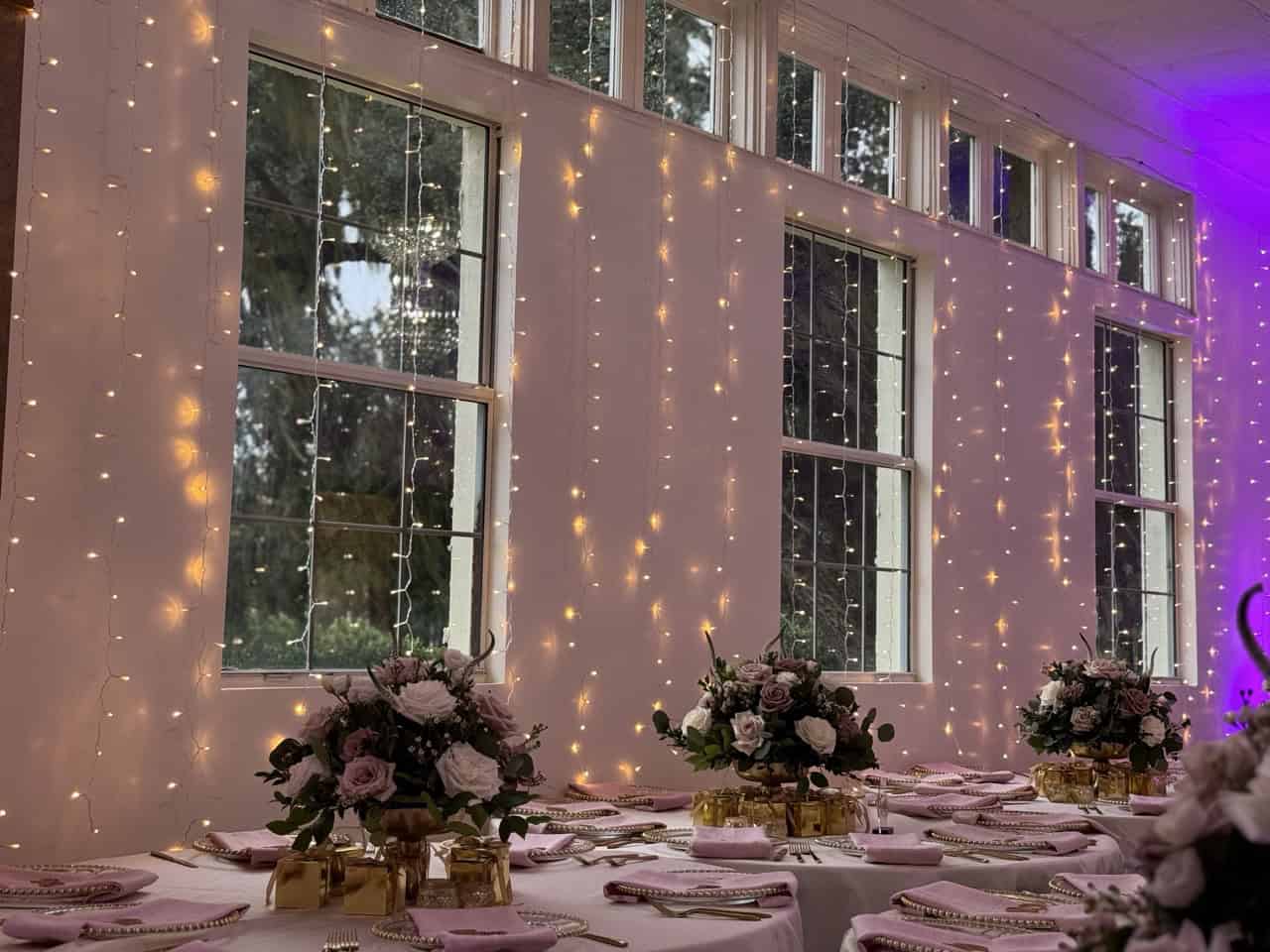
Instead of filling every surface with fixtures, the design may concentrate on the most important areas: dining tables, the dance floor, architectural features, a ceremony area, stage, entrance, or focal wall.
Decorative lighting such as twinkle lighting, chandeliers, or bistro and string lighting can add warmth and atmosphere without overwhelming a smaller room.
For weddings, a smaller fixture count can still produce a highly finished result when the lighting is coordinated with décor, florals, table layouts, and the overall reception design.
Couples planning a reception can also explore the TYLERLIGHT Wedding Lighting Guide for additional planning ideas.
Higher Ceilings Can Change the Type of Fixture You Need
Ceiling height can make a major difference in lighting design. A fixture that works perfectly in a room with a 10-foot ceiling may perform very differently in a ballroom with a ceiling two or three times higher.
Higher ceilings can require greater output, different beam angles, different mounting positions, or fixtures designed to throw light over longer distances.
Ceiling height is particularly important for stage lighting, chandeliers, projection, architectural lighting, and overhead effects.
It also affects how visible the lighting equipment itself will be. In some environments the fixtures should disappear into the room; in others, truss, moving lights, and production equipment are intentionally part of the visual design.
Stage Lighting Has Different Requirements Than Room Lighting
Stage lighting is usually designed around visibility, presentation quality, and depth rather than simply adding color to the room.
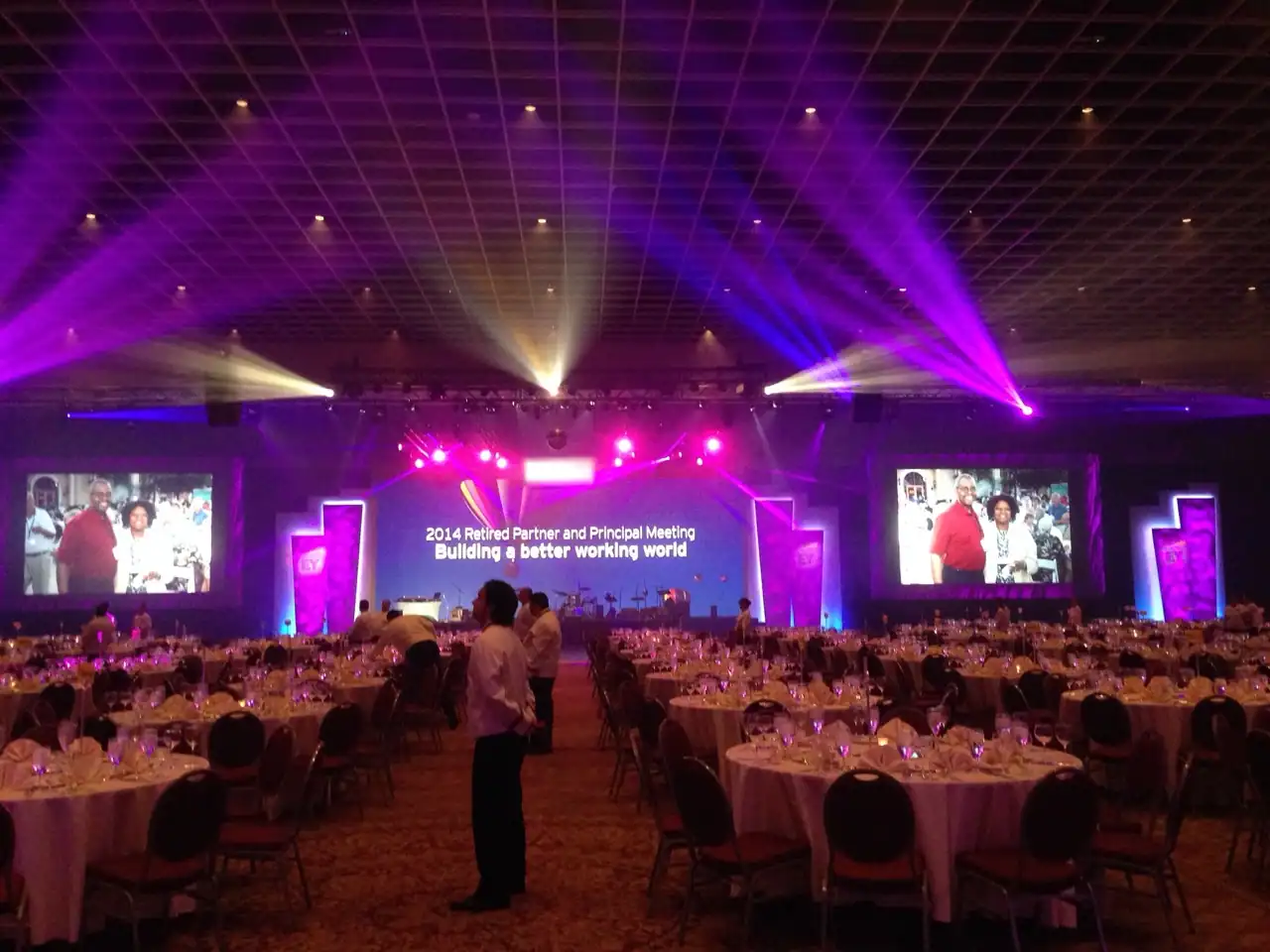
Speakers, musicians, performers, presenters, and award recipients need to remain clearly visible from the audience. Front lighting may be used for faces, while color washes, backlighting, moving lights, and scenic lighting help give the stage dimension.
Corporate events may also need lighting that works well for photography, video, livestreaming, or projection screens.
The size of the stage, distance from the audience, ceiling height, scenic elements, screen placement, and type of presentation all influence how many fixtures are needed.
TYLERLIGHT provides professional stage lighting in Orlando for conferences, presentations, bands, entertainment, galas, and live productions.
Existing Venue Lighting Can Help — or Compete With the Design
Every venue already has some form of ambient light. Ballrooms may have chandeliers or recessed lighting. Restaurants may have decorative fixtures. Outdoor venues may have landscape lighting, pathway lights, streetlights, or illumination from surrounding buildings.
That existing light can either support the event design or compete with it.
If the room is already bright, additional fixtures may be used primarily for color, atmosphere, branding, or visual emphasis. If the venue becomes extremely dark once house lights are dimmed, the event design may also need to provide enough functional illumination for guests to move comfortably through the space.
Understanding the venue’s existing lighting before the event can prevent unnecessary equipment from being added later.
How Many Uplights Does a Ballroom Need?
Uplighting is one of the most common areas where clients ask for a fixture count before the venue has been evaluated.
The correct number depends on the length of the walls, number of columns, architectural features, doorways, stage areas, and the amount of visual coverage the client wants.
Fixtures can be spaced farther apart when the goal is to create individual columns of color. They can be positioned closer together when the design calls for a more continuous wash across a wall.
Large ballrooms with long perimeter walls generally require more fixtures than smaller rooms. Outdoor uplighting may also be placed around trees, landscaping, columns, or building exteriors.
See TYLERLIGHT Orlando uplighting services for examples of how color and fixture spacing can change a room.
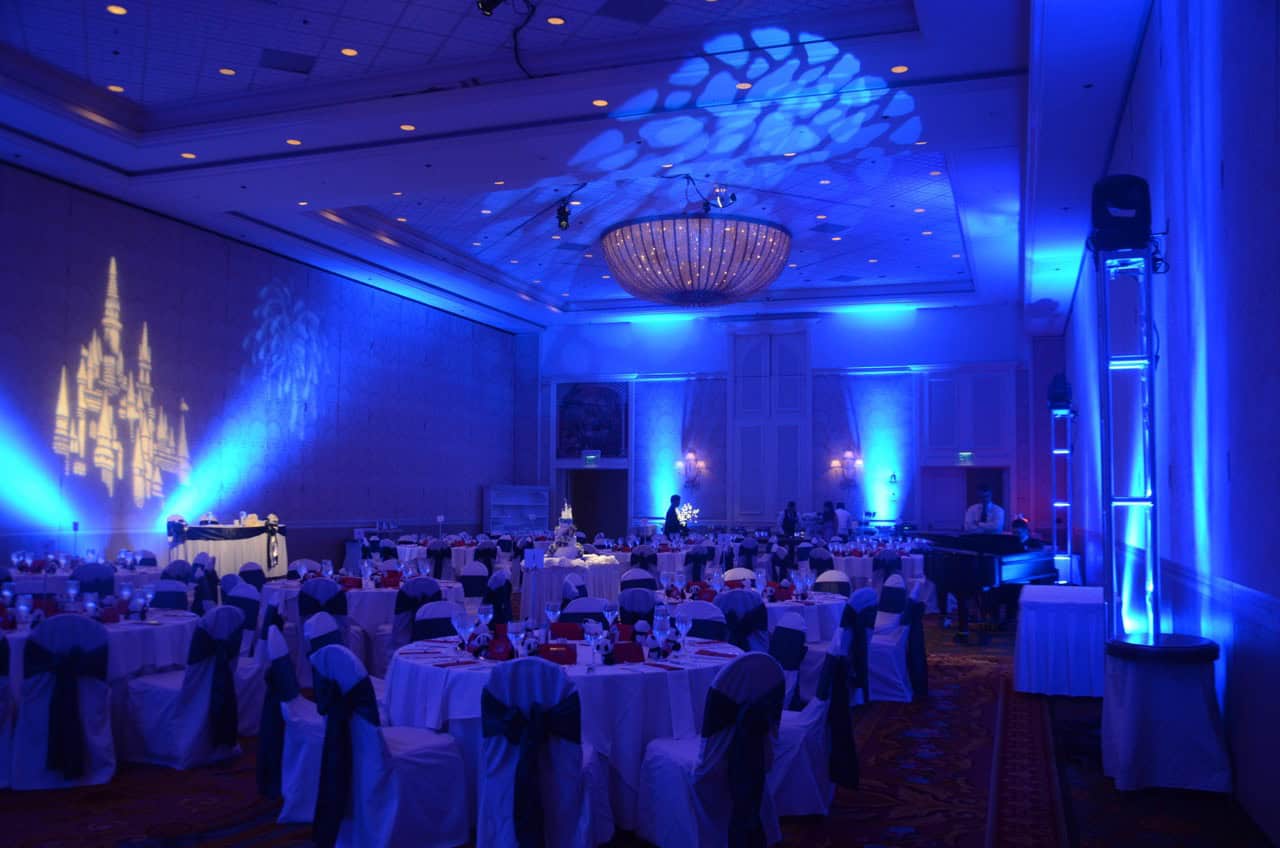
The Same Venue Can Need Different Lighting for Different Events
Guest count and room layout can change the lighting plan even when the venue itself remains exactly the same.
A ballroom arranged for 75 guests may use only part of the room, while the same ballroom configured for 500 guests may require lighting across the entire space.
Tables, bars, dance floors, stages, registration areas, lounges, buffets, photo areas, and entrances all affect where light is needed.
A professional lighting design considers where guests will actually spend time and how they will move through the venue.
This is especially important for corporate events in Orlando where presentations, networking, dining, entertainment, and branded environments may all share the same room.
Large Stages and Concert Environments Require a Different Scale
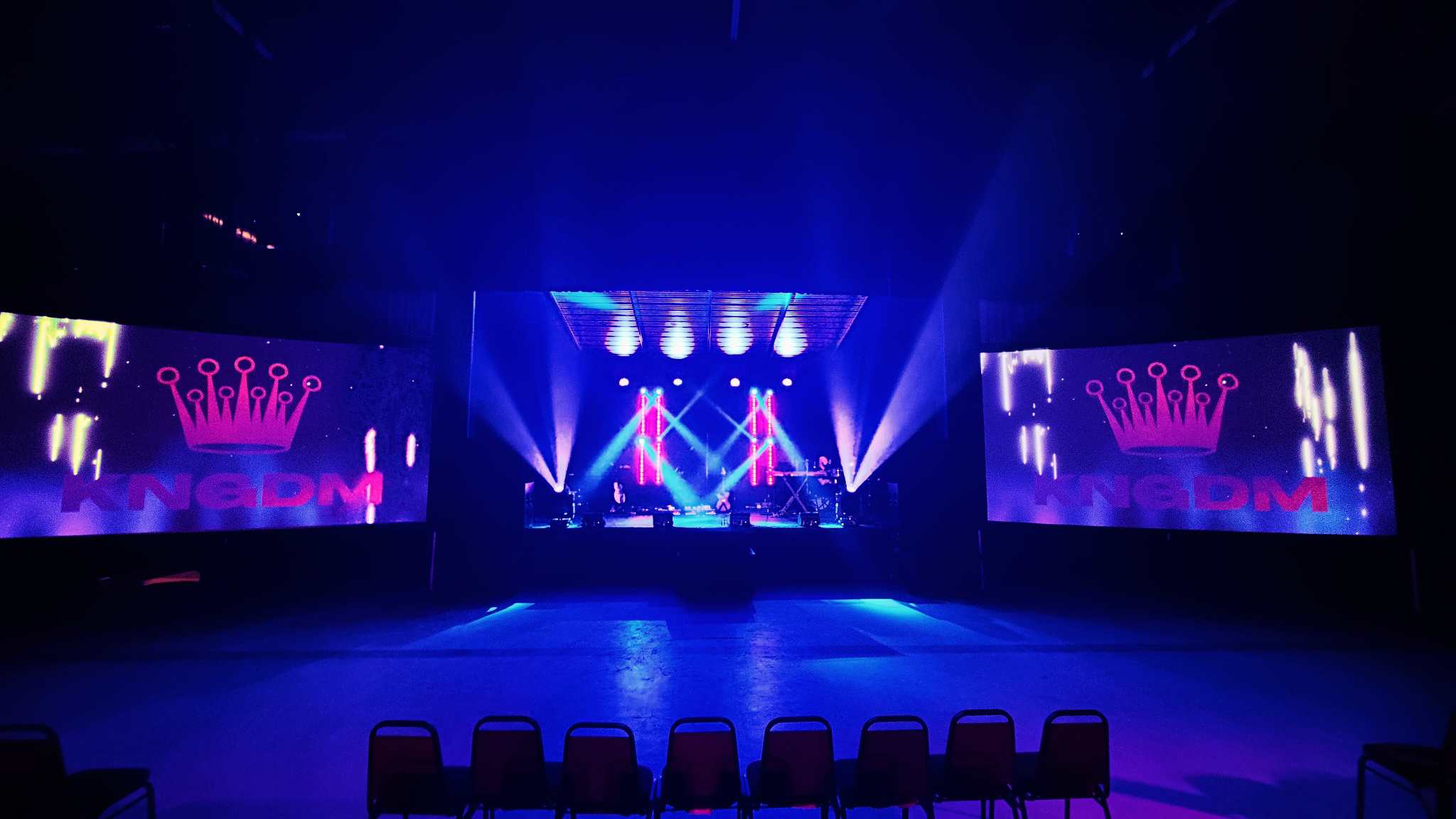
As the scale of the production increases, fixture quantity becomes only one part of the equation.
Concerts, live performances, conferences, and large corporate productions may combine moving lights, wash fixtures, front light, backlighting, LED screens, scenic lighting, haze, and control systems.
Each fixture has a specific purpose. Some illuminate performers. Some create color or movement. Others provide visual separation between the stage and background.
The design has to consider sight lines, camera positions, screen brightness, audience distance, power distribution, rigging, and the production schedule.
Outdoor Venues Often Need More Functional Lighting
Outdoor events can present a completely different challenge because there may be very little existing illumination after sunset.
Pathways, dining areas, bars, landscaping, entrances, parking, stages, and guest circulation areas may all need some level of functional light.
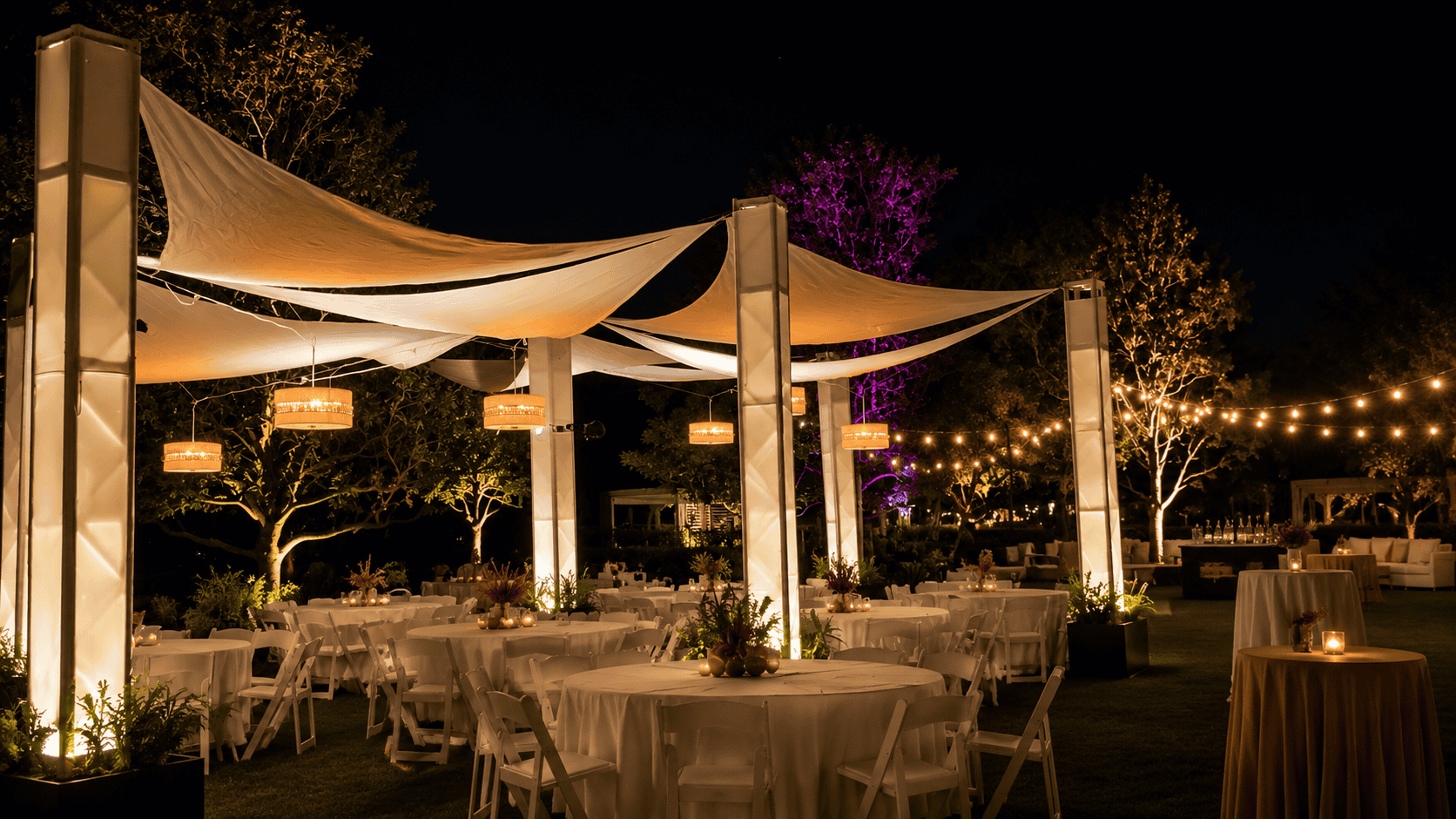
Outdoor designs can combine bistro and string lighting , uplighting, chandeliers , architectural lighting, and air-filled specialty lighting .
Weather exposure, electrical access, fixture placement, mounting locations, surrounding properties, and guest safety also become important considerations.
The Best Event Lighting Usually Uses More Than One Type of Fixture
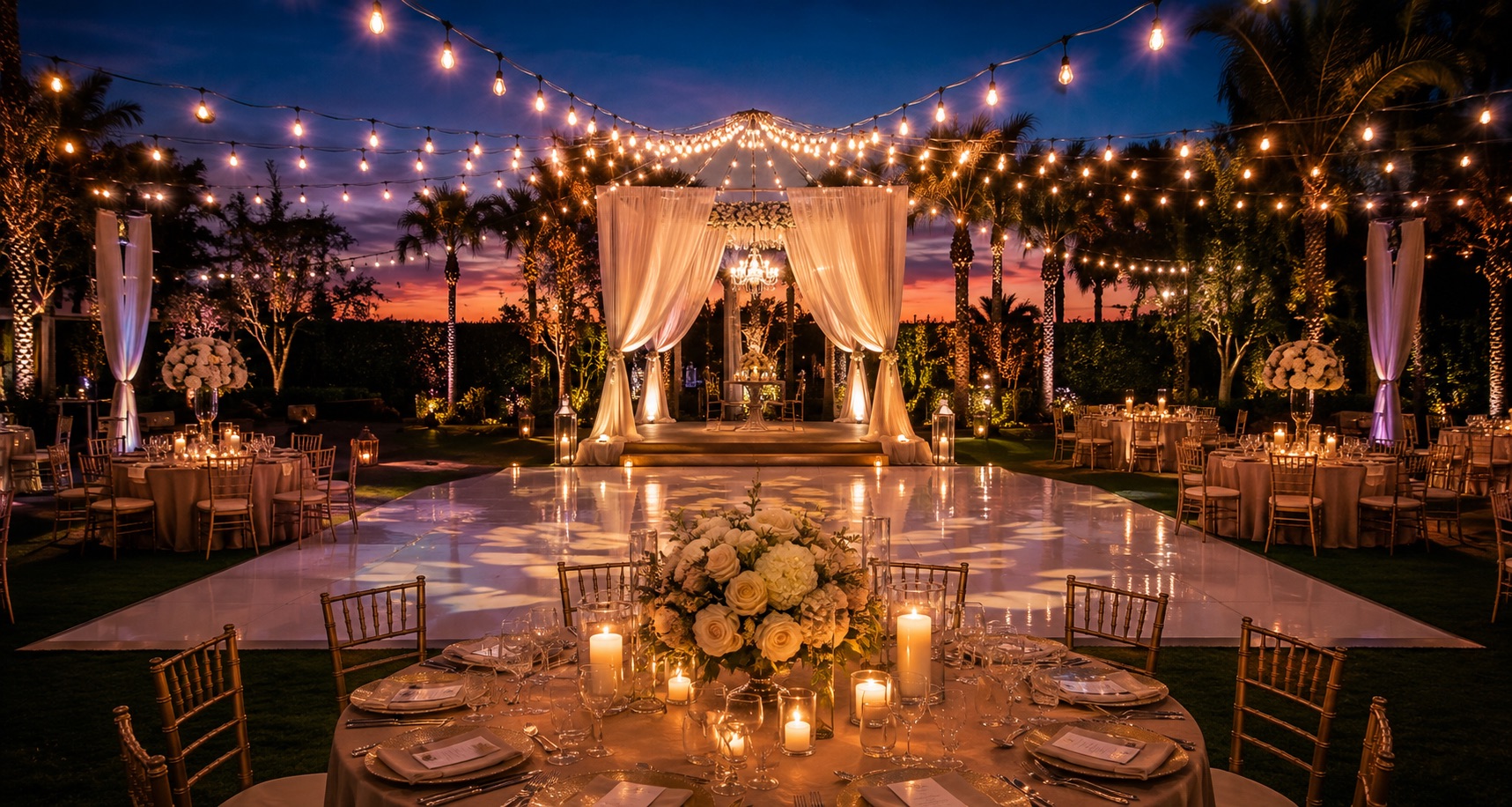
One of the biggest mistakes in event lighting is relying on only one type of fixture.
The strongest environments usually combine several layers of light.
Uplighting may define the architecture. Chandeliers or string lighting may provide decorative illumination. Stage fixtures may support speakers and performers. GOBO projection may add branding or personalization. Specialty fixtures may help define entrances, lounges, or other focal areas.
Each layer serves a different purpose, and when those layers are designed together the venue feels more intentional and visually balanced.
Browse the TYLERLIGHT event lighting portfolio for additional examples of layered lighting environments.
There is no rule that says a certain number of guests requires a certain number of lights. The correct lighting plan depends on the venue, architecture, layout, production requirements, and the experience the client wants to create.
How TYLERLIGHT Determines the Right Amount of Lighting
The best way to determine how much lighting an Orlando venue needs is to start with information about the actual event.
Venue photographs, floor plans, room dimensions, ceiling height, guest count, event schedule, stage requirements, décor plans, existing lighting, and inspiration images can all help determine the right approach.
TYLERLIGHT evaluates the space and recommends lighting based on what the event actually needs rather than simply adding equipment for the sake of increasing fixture count.
Whether the event is a wedding reception, corporate conference, gala, awards dinner, outdoor celebration, or live production, the goal remains the same: use the right lighting, in the right locations, to create the strongest result.
Let the Venue Determine the Right Lighting Plan.
Share your venue, guest count, event schedule, and lighting goals with TYLERLIGHT. We can evaluate the space and recommend a lighting design built around your actual event rather than a one-size-fits-all fixture count.